Tell us about the job
Takes about a minute. No obligation.
Sizing a heat pump for a Lafayette County home starts with the house itself: its insulation, its layout, its heating and cooling load as it actually stands. 88 severe weather events were recorded in Lafayette County, Wisconsin between 2015 and 2024. At roughly the national median, that record describes a place where severe weather is a periodic fact rather than a relentless one, which means a contractor can size a system around the building's real demand rather than building in heavy margins to absorb constant weather stress. Installation quality and accurate load calculation are what determine whether a system runs efficiently here, because the climate alone will not paper over a poor install.
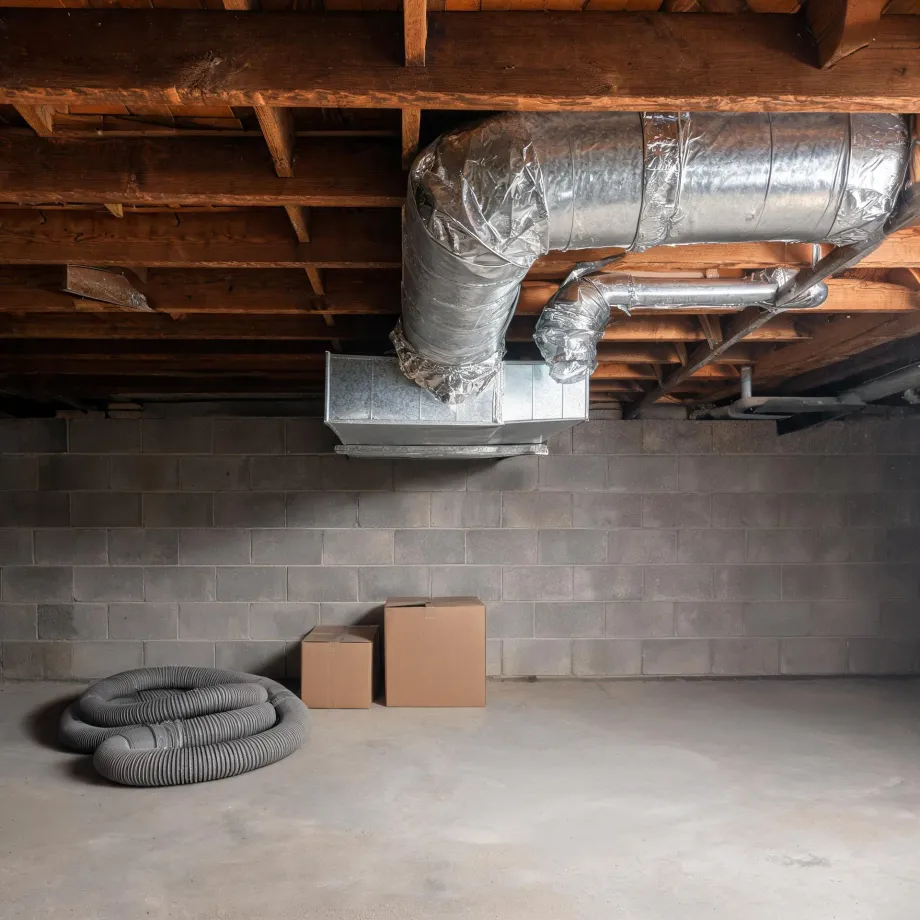
Existing ductwork is the part of a heat pump installation that either holds or doesn't. Half the homes in Lafayette County, Wisconsin were built in 1966 or earlier (2020-2024 ACS 5-year). Duct systems in houses that age were designed around the delivery requirements of whatever heated and cooled them then, and a heat pump moves air differently. A contractor assessing the job has to get into that ductwork before the equipment can be quoted, checking whether the runs, the sizing, and the return capacity will carry what a heat pump actually asks of them. The electrical service gets the same look, since the panel in a house of this vintage was not wired with a heat pump's draw in mind.
What Gets Installed With a New Heat Pump
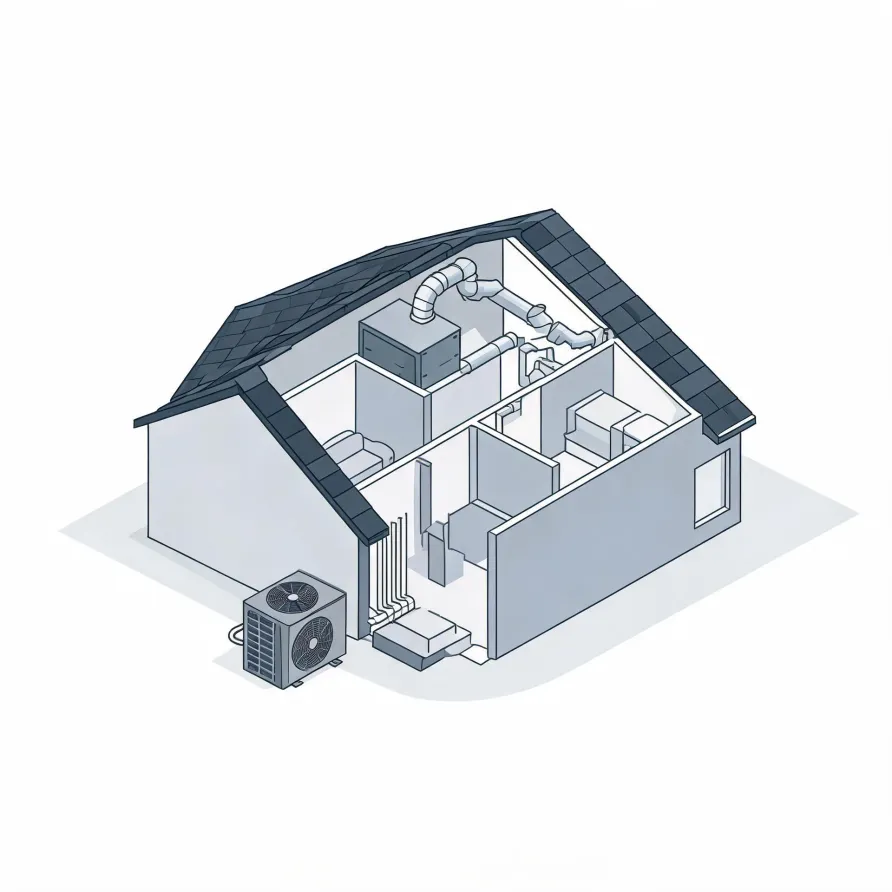
The outdoor unit sits on a pad beside the house and holds the compressor and the condenser coil. The indoor air handler mounts inside, often in a utility room, basement, or closet, and pushes conditioned air into the living space. These two units are the core of what a contractor places and connects.
A refrigerant line set runs between the outdoor and indoor units, carrying refrigerant through insulated copper tubing routed along the exterior or through walls. A thermostat goes on an interior wall where it can read the home's temperature and signal the system to run.
The drawing shows a representative layout, and a licensed contractor determines exactly how the system fits the structure of your home.
Get matched in Lafayette CountyLafayette County, Wisconsin, by the numbers
88 severe weather events were recorded in Lafayette County, Wisconsin between 2015 and 2024.
NOAA National Centers for Environmental Information, Storm Events Database, bulk CSV export, events 2015-01-01 through 2024-12-31.Half the homes in Lafayette County, Wisconsin were built in 1966 or earlier (2020-2024 ACS 5-year).
U.S. Census Bureau, 2020-2024 American Community Survey 5-Year EstimatesLafayette County, Wisconsin holds 7,234 housing units (2020-2024 ACS 5-year).
U.S. Census Bureau, 2020-2024 American Community Survey 5-Year EstimatesOwners occupy 80.2% of the occupied homes in Lafayette County, Wisconsin (2020-2024 ACS 5-year).
U.S. Census Bureau, 2020-2024 American Community Survey 5-Year EstimatesRules and Standards Behind Heat Pump Installation in Lafayette County, Wisconsin2 sourced rules and standards
Licensing and Legal Requirements in Lafayette County, Wisconsin
A Wisconsin business that employs a certified HVAC qualifier is a certified HVAC business, and no city or county may require it to hold a local certification or licence on top of that.
Wisconsin requires a state HVAC contractor registration: no person or business may install or service heating, ventilating or air conditioning equipment, or offer to, without one.
Severe Weather Events in Lafayette County
Weather in Lafayette County puts real demands on heating and cooling equipment, and those demands shape what a heat pump here needs to handle over its service life. That workload is local, not theoretical, which is why local weather history belongs on a page about installation.
88 severe weather events, 2015–2024. Source: NOAA National Centers for Environmental Information, Storm Events Database.