Tell us about the job
Takes about a minute. No obligation.
A contractor quoting a heat pump installation in Taylor County starts with the building, not a catalog page. Duct layout, insulation quality, and the thermal envelope of the house are what drive the equipment size. 86 severe weather events were recorded in Taylor County, Wisconsin between 2015 and 2024. At roughly forty-three out of a hundred counties nationally, that record puts Taylor County in the middle of the range, meaning severe weather is real here but not the dominant factor shaping every install decision. What a contractor has to establish first is how hard this particular house is going to ask the system to work on an ordinary January day, and that answer comes from a load calculation, not from the storm history.
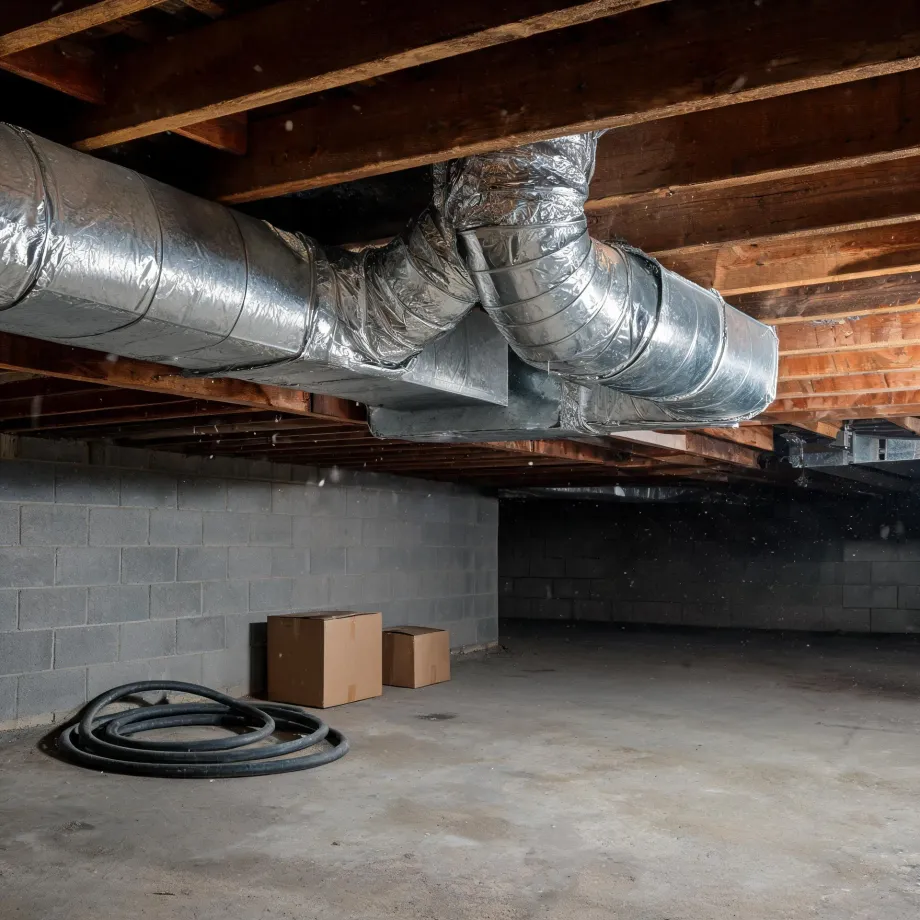
Ductwork laid out for a furnace carries air in a pattern that suits forced combustion heat: big supply runs, modest returns, designed for high-temperature delivery. A heat pump moves a larger volume of air at lower temperatures, and ducts that were never sized for that load restrict it. Half the homes in Taylor County, Wisconsin were built in 1978 or earlier (2020-2024 ACS 5-year). That is the detail a contractor has to measure and trace before the electrical service even enters the conversation, because undersized or poorly routed ductwork in a house of this vintage produces uneven conditioning that no refrigerant charge or equipment setting will fix.
What Gets Installed With a New Heat Pump
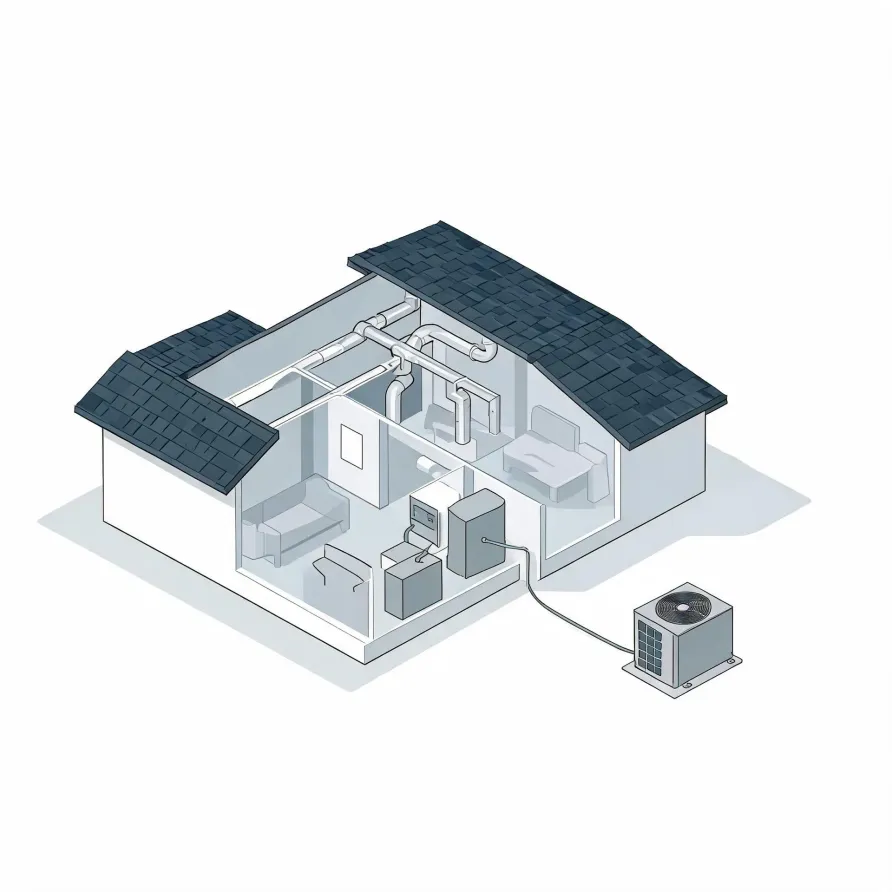
The outdoor unit is the piece most homeowners see first. It sits on a pad beside the house and holds the compressor and the outdoor coil, which do the core work of moving heat between outside air and the refrigerant. Inside, an air handler or furnace coil mounts in a utility space, basement, or closet and carries that conditioning into the home.
A thermostat goes on an interior wall where it reads the living space and signals the system to run. Refrigerant lines connect the outdoor unit to the indoor coil, running through a small penetration in the wall, and a condensate drain handles the moisture the indoor coil pulls from the air.
The drawing shows a standard layout, and a licensed contractor determines what fits the specifics of your house.
Get matched in Taylor CountyTaylor County, by the numbers
86 severe weather events were recorded in Taylor County, Wisconsin between 2015 and 2024.
NOAA National Centers for Environmental Information, Storm Events Database, bulk CSV export, events 2015-01-01 through 2024-12-31.Half the homes in Taylor County, Wisconsin were built in 1978 or earlier (2020-2024 ACS 5-year).
U.S. Census Bureau, 2020-2024 American Community Survey 5-Year EstimatesTaylor County, Wisconsin holds 9,537 housing units (2020-2024 ACS 5-year).
U.S. Census Bureau, 2020-2024 American Community Survey 5-Year EstimatesOwners occupy 79.7% of the occupied homes in Taylor County, Wisconsin (2020-2024 ACS 5-year).
U.S. Census Bureau, 2020-2024 American Community Survey 5-Year EstimatesCodes & Standards Governing Heat Pump Installation in Taylor County, Wisconsin2 sourced rules and standards
Licensing Rules for Taylor County, Wisconsin
A Wisconsin business that employs a certified HVAC qualifier is a certified HVAC business, and no city or county may require it to hold a local certification or licence on top of that.
Wisconsin requires a state HVAC contractor registration: no person or business may install or service heating, ventilating or air conditioning equipment, or offer to, without one.
Severe Weather Events in Taylor County
Weather in Taylor County puts real demands on heating and cooling equipment, and those demands shape what a heat pump installation here needs to handle. How hard a system works over its life is a local question, and the record below is part of that picture.
86 severe weather events, 2015–2024. Source: NOAA National Centers for Environmental Information, Storm Events Database.