Tell us about the job
Takes about a minute. No obligation.
A contractor quoting a heat pump install in Portage County has to account for what the system will actually run against, and the weather record here is neither trivial nor extreme. 98 severe weather events were recorded in Portage County, Wisconsin between 2015 and 2024. At roughly the national median, that puts severe weather in the category of a recurring operating condition rather than a rare disruption, which matters for how a contractor sizes the equipment and specifies the installation. A unit undersized for the genuine cooling and heating demands this area produces will cycle harder and wear faster. Getting the load calculation right, and sealing the installation properly against the conditions here, is what determines how the system performs over its full service life.
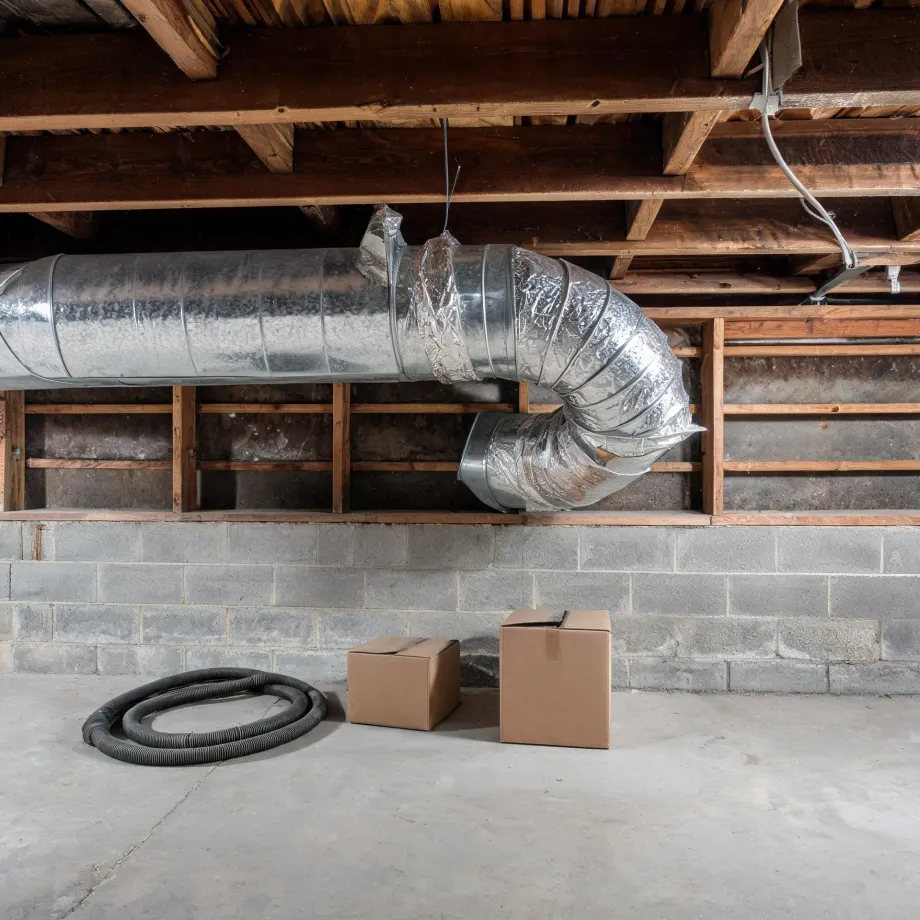
Ductwork laid down for a furnace and central air setup carries assumptions about airflow that a heat pump does not share. Half the homes in Portage County, Wisconsin were built in 1979 or earlier (2020-2024 ACS 5-year). That age of construction means a contractor installing a heat pump here sizes and tests the existing duct system before the new unit is ever ordered, because ducts that worked for the old equipment can restrict airflow enough to undercut the new system's efficiency from day one. The electrical service gets the same look: heat pumps draw differently than what many of these houses were wired to feed. What the contractor finds in both tells them whether the installation is straightforward or whether the scope widens before the equipment goes in.
What Gets Installed With a New Heat Pump
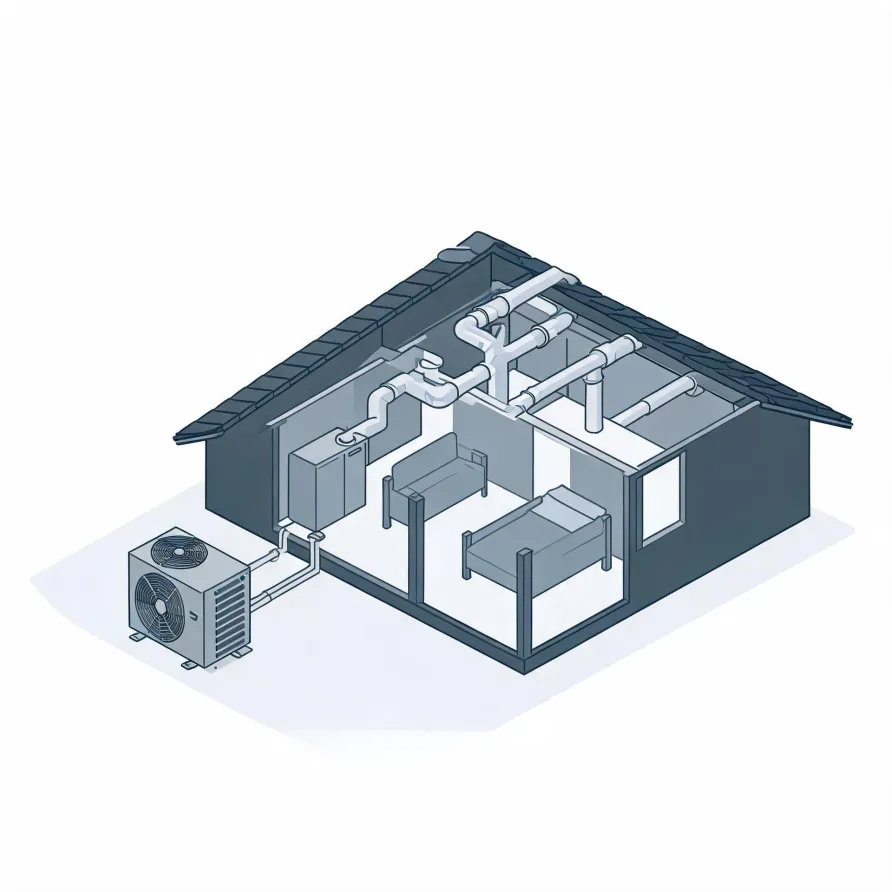
The outdoor unit sits on a pad beside the house and holds the compressor and the outdoor coil. The indoor air handler mounts inside, usually in a utility closet, basement, or attic, and moves conditioned air through the home. These two units are the core of what a contractor brings to the job.
A refrigerant line set runs between the outdoor unit and the air handler, carrying the working fluid that lets the two units act as one system. A thermostat goes on an interior wall and gives the homeowner control over the whole system. The disconnect box mounts near the outdoor unit and gives the contractor a safe shutoff point for service.
The drawing shows a typical layout, and a licensed contractor determines exactly how these pieces fit and connect in your home.
Get matched in Portage CountyPortage County, by the numbers
98 severe weather events were recorded in Portage County, Wisconsin between 2015 and 2024.
NOAA National Centers for Environmental Information, Storm Events Database, bulk CSV export, events 2015-01-01 through 2024-12-31.Half the homes in Portage County, Wisconsin were built in 1979 or earlier (2020-2024 ACS 5-year).
U.S. Census Bureau, 2020-2024 American Community Survey 5-Year EstimatesPortage County, Wisconsin holds 31,746 housing units (2020-2024 ACS 5-year).
U.S. Census Bureau, 2020-2024 American Community Survey 5-Year EstimatesOwners occupy 69.7% of the occupied homes in Portage County, Wisconsin (2020-2024 ACS 5-year).
U.S. Census Bureau, 2020-2024 American Community Survey 5-Year EstimatesRules & Standards Governing Heat Pump Installation in Portage County, Wisconsin2 sourced rules and standards
Licensing and Legal Requirements in Portage County, Wisconsin
A Wisconsin business that employs a certified HVAC qualifier is a certified HVAC business, and no city or county may require it to hold a local certification or licence on top of that.
Wisconsin requires a state HVAC contractor registration: no person or business may install or service heating, ventilating or air conditioning equipment, or offer to, without one.
Severe Weather in Portage County
Heating and cooling equipment in Portage County works against whatever the local climate delivers, and that workload shapes what gets installed and how it gets sized. A heat pump specified for this area has to hold up to the full range of conditions the county actually sees.
98 severe weather events, 2015–2024. Source: NOAA National Centers for Environmental Information, Storm Events Database.