Tell us about the job
Takes about a minute. No obligation.
Sizing a heat pump for a Door County home requires a contractor to account for what this particular stretch of Wisconsin actually asks of the equipment through its winters and summers, not just what the catalog says for the region. 89 severe weather events were recorded in Door County, Wisconsin between 2015 and 2024. That rate puts severe weather somewhere in the middle of the national range, meaning storms are real here but do not define the operating life of a system the way they might in a busier corridor. What does define it is the lake effect: cold that arrives hard and fast off Green Bay sets the floor a heat pump has to hold against, and a unit sized for average Upper Midwest conditions can fall short of that. A contractor quoting an install here prices the equipment to that cold floor, and the refrigerant circuit, the backup heat strip, and the insulation envelope all get sized to match it.
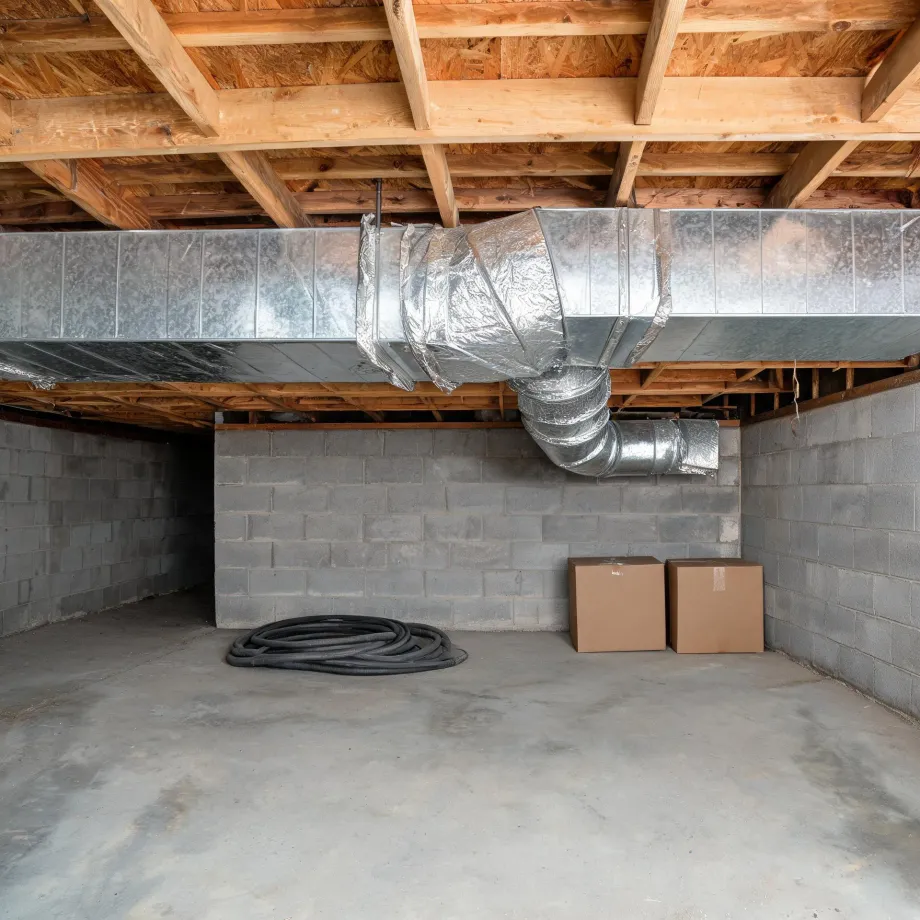
Ductwork laid in for an older heating system carries assumptions about airflow, trunk sizing, and return placement that a heat pump does not share. Half the homes in Door County, Wisconsin were built in 1983 or earlier (2020-2024 ACS 5-year). A contractor assessing a heat pump installation in this county opens registers, measures static pressure, and checks whether the existing runs can move the air volumes a heat pump needs before the new unit is ever priced. Where the ductwork falls short, the scope grows. The electrical panel gets checked on the same visit, since older service entries often predate the dedicated circuits a heat pump draws on.
What Gets Installed With a New Heat Pump
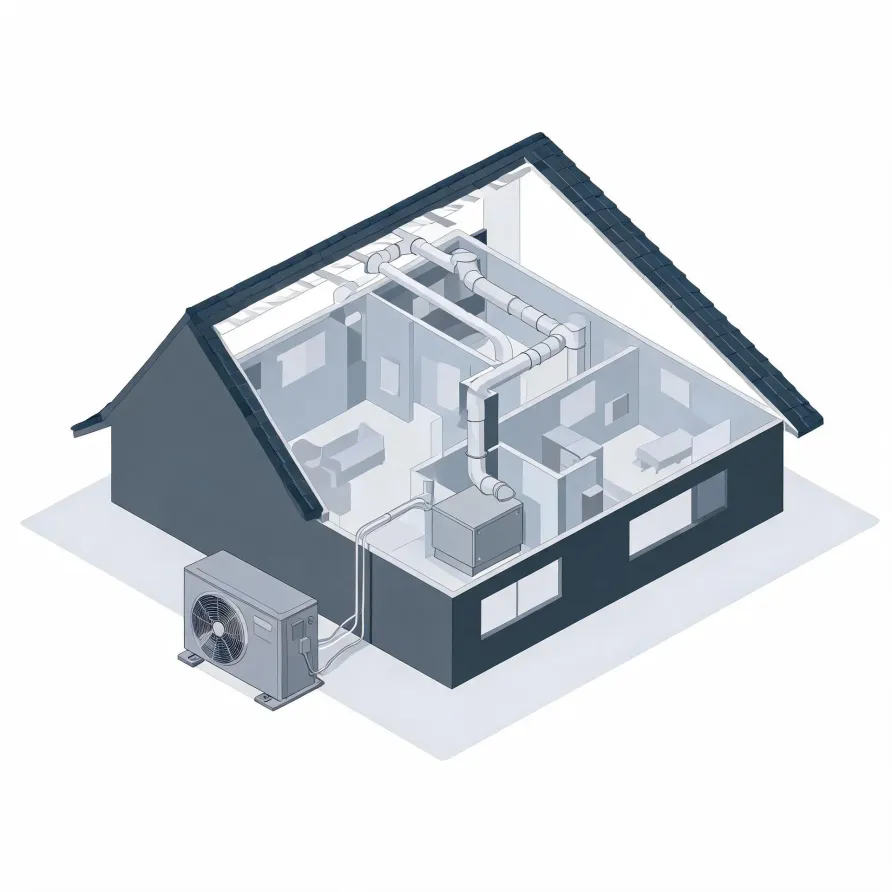
The outdoor unit is the piece a homeowner sees first, a cabinet set on a pad or mounted to the exterior wall that houses the compressor and outdoor coil. Inside the house, the air handler sits in a mechanical room, closet, or attic and moves conditioned air through the home. Both units arrive as separate assemblies and get set in place before anything connects them.
A refrigerant line set runs between the two units, carrying the working fluid through insulated copper tubing that travels along the exterior or through the wall cavity. The thermostat goes on an interior wall and gives the homeowner control over the whole system. A condensate drain line runs from the air handler to a nearby drain to carry away the moisture the indoor coil pulls from the air.
The drawing shows a representative layout, and a licensed contractor determines exactly what applies to your house.
Get matched in Door CountyDoor County by the Numbers
89 severe weather events were recorded in Door County, Wisconsin between 2015 and 2024.
NOAA National Centers for Environmental Information, Storm Events Database, bulk CSV export, events 2015-01-01 through 2024-12-31.Half the homes in Door County, Wisconsin were built in 1983 or earlier (2020-2024 ACS 5-year).
U.S. Census Bureau, 2020-2024 American Community Survey 5-Year EstimatesDoor County, Wisconsin holds 24,436 housing units (2020-2024 ACS 5-year).
U.S. Census Bureau, 2020-2024 American Community Survey 5-Year EstimatesOwners occupy 78.2% of the occupied homes in Door County, Wisconsin (2020-2024 ACS 5-year).
U.S. Census Bureau, 2020-2024 American Community Survey 5-Year EstimatesRules & Standards Behind Heat Pump Installation in Door County, Wisconsin2 sourced rules and standards
Licensing and Legal Requirements in Door County, Wisconsin
A Wisconsin business that employs a certified HVAC qualifier is a certified HVAC business, and no city or county may require it to hold a local certification or licence on top of that.
Wisconsin requires a state HVAC contractor registration: no person or business may install or service heating, ventilating or air conditioning equipment, or offer to, without one.
Severe Weather Events in Door County, Year by Year
Door County's climate puts real demands on heating and cooling equipment, and those demands shape what a heat pump installation here needs to handle. Weather history is load history, and load history is what drives the right equipment decisions for this area.
89 severe weather events, 2015–2024. Source: NOAA National Centers for Environmental Information, Storm Events Database.