
How long heat pumps last in Wisconsin

Send the form and stop researching installers for the new heat pump.

I'm done searching

How long do heat pumps last in Wisconsin?

You've got a heat pump running through Wisconsin winters, and you're wondering how many more years it has in it before you're looking at a replacement. Most of your neighbors heat with gas, so there isn't always someone nearby to compare notes with about running a heat pump through a cold snap. You want a real number, not a guess, so you can plan for what's coming.

About 15 years, often less here than in milder states

A heat pump in Wisconsin typically runs 12 to 15 years. The unit works harder here than it would somewhere mild, because it has to pull heat out of freezing outdoor air all winter, not just cool a house in summer. That extra load on the compressor adds up over the years. Add in the muggy summers, and the system is working close to year round with barely a break. Power here isn't cheap, so a heat pump running past its prime tends to show up on the electric bill before it breaks down outright. If yours came with the house, it's worth finding out its age and having it looked at before a cold snap finds the weak spot for you.

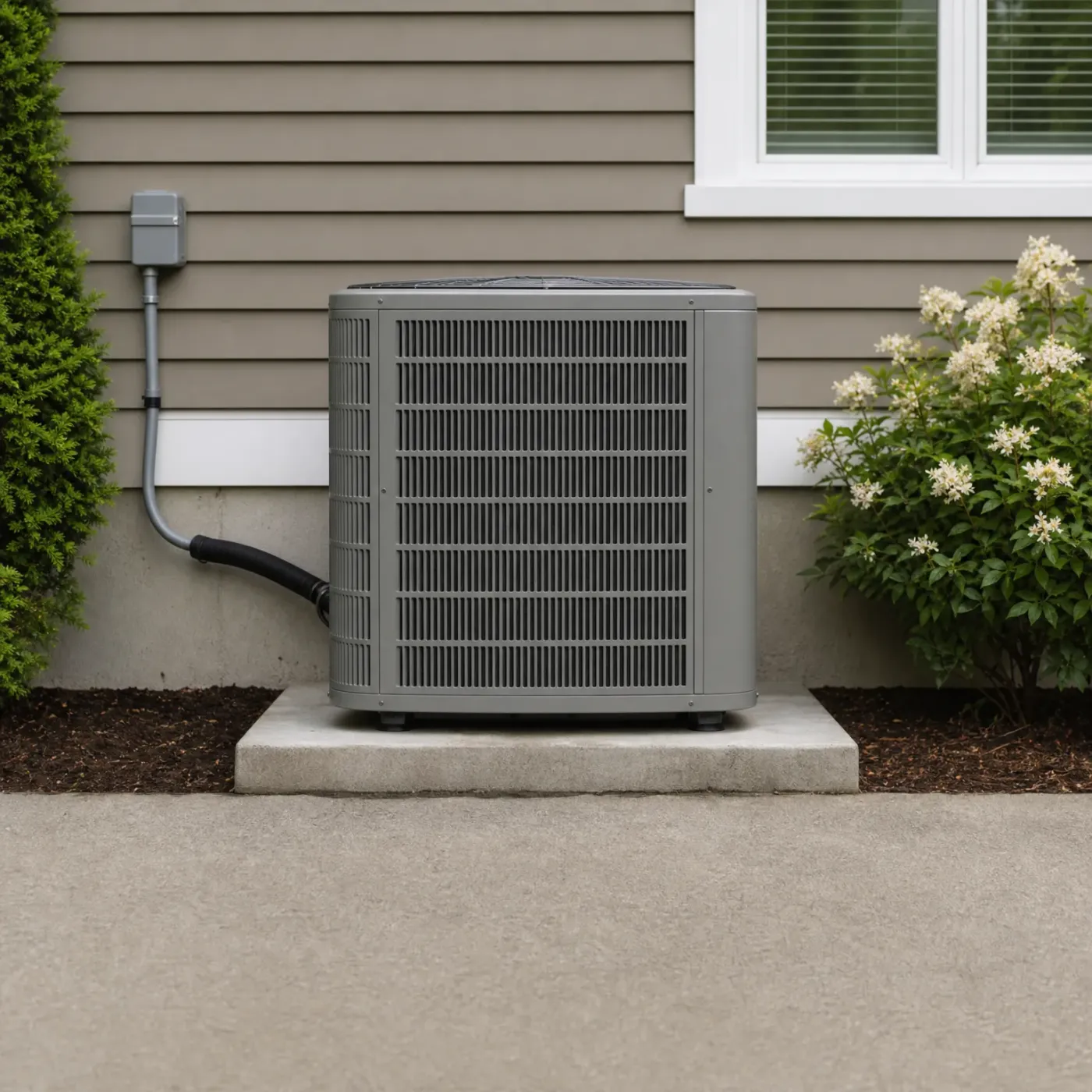
A gray outdoor condenser unit on a concrete pad beside a house with horizontal lap siding, a conduit and disconnect box on the wall, a shrub with white flowers at right and evergreen foliage at left.

Running clean

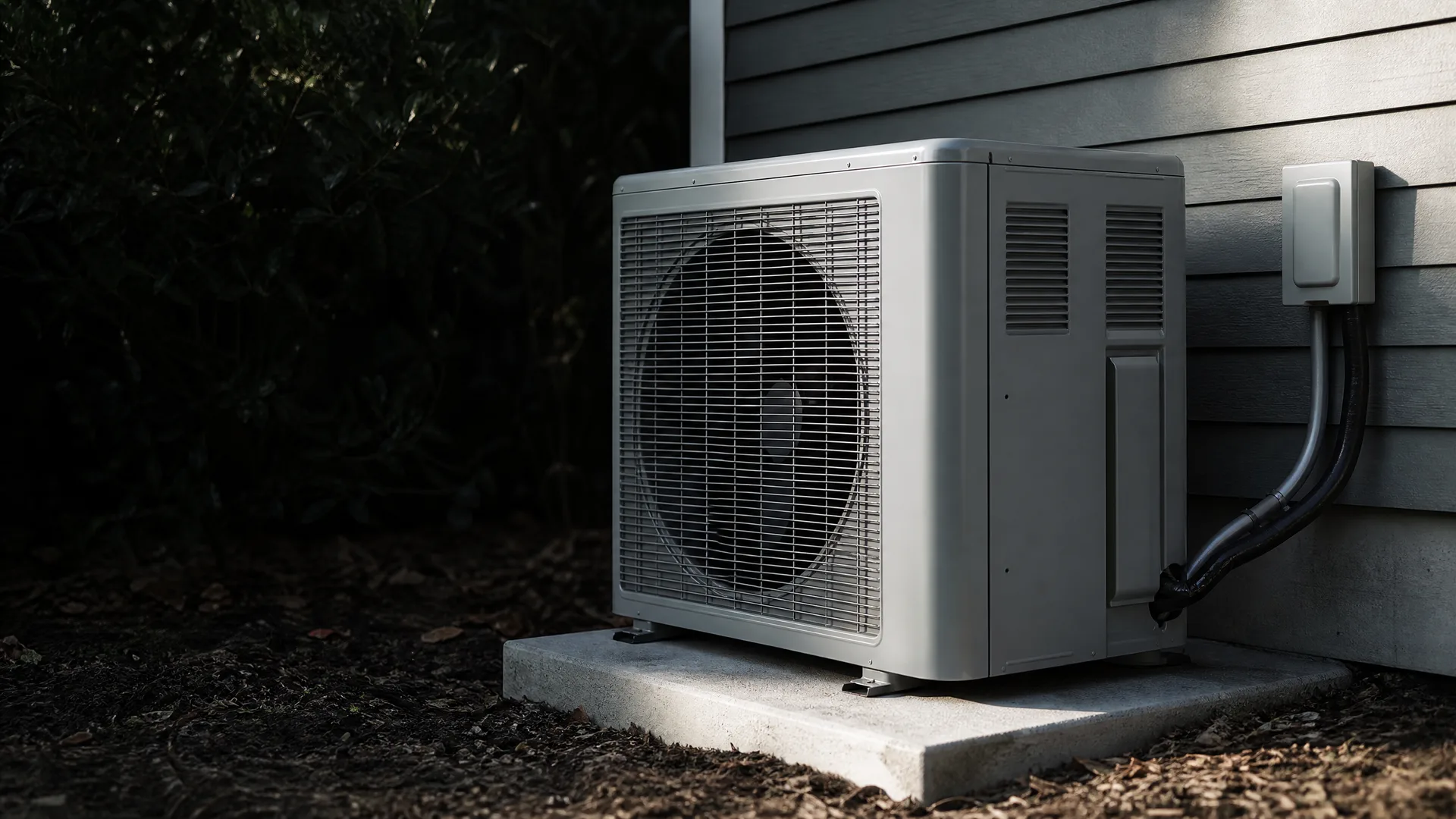
A heat pump that's getting its due looks like this: coil fins clear, cabinet clean, nothing blocking the airflow around it. Set on a solid pad, lines intact, it can hold up through a Wisconsin winter and still handle the muggy months without strain.
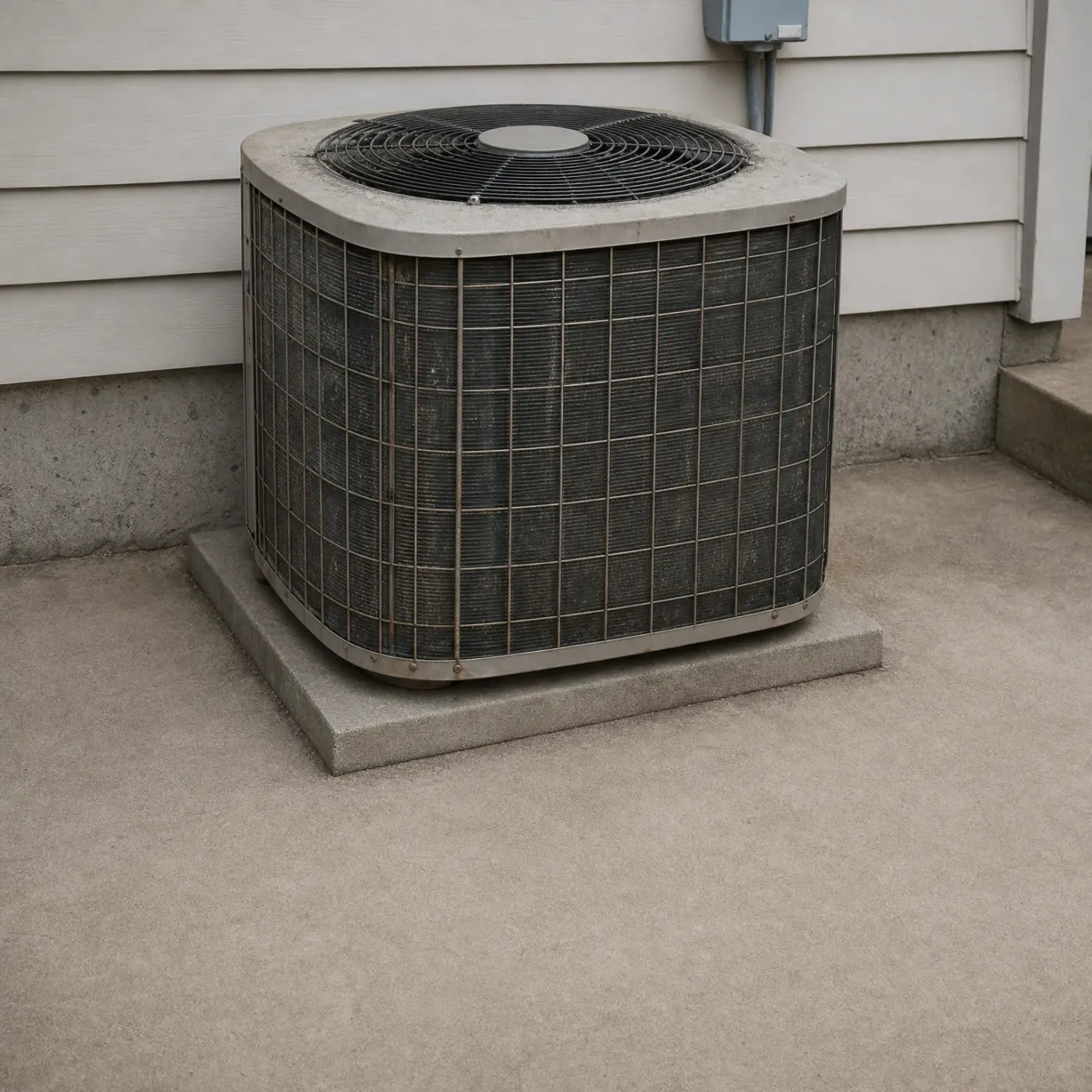
An outdoor air conditioning condenser unit with a top fan grille sits on a concrete pad beside a house with horizontal siding and a concrete step.

Choked with grime

This one's coil is caked with dust and yard debris, the grille darkened with it. A heat pump working that hard to move air draws more power doing it, and in a state where power already costs more, that adds up fast while shortening how long the unit lasts.

Is your heat pump already telling you something

Walk past it and listen. A unit near the end of its run in Wisconsin starts making a low hum or a rattle that wasn't there before, especially when it kicks on during a cold snap. Inside, the air from the vents feels cooler than it should, or the house takes longer to come up to temperature than it used to. You might notice the backup heat running more than it used to, because the heat pump can't keep up on its own anymore. Frost that builds up on the outdoor unit and doesn't clear during the defrost cycle is another sign. None of this means it quits tomorrow, but ignoring it usually means a bigger repair bill or a cold house on the night you can least afford either one.

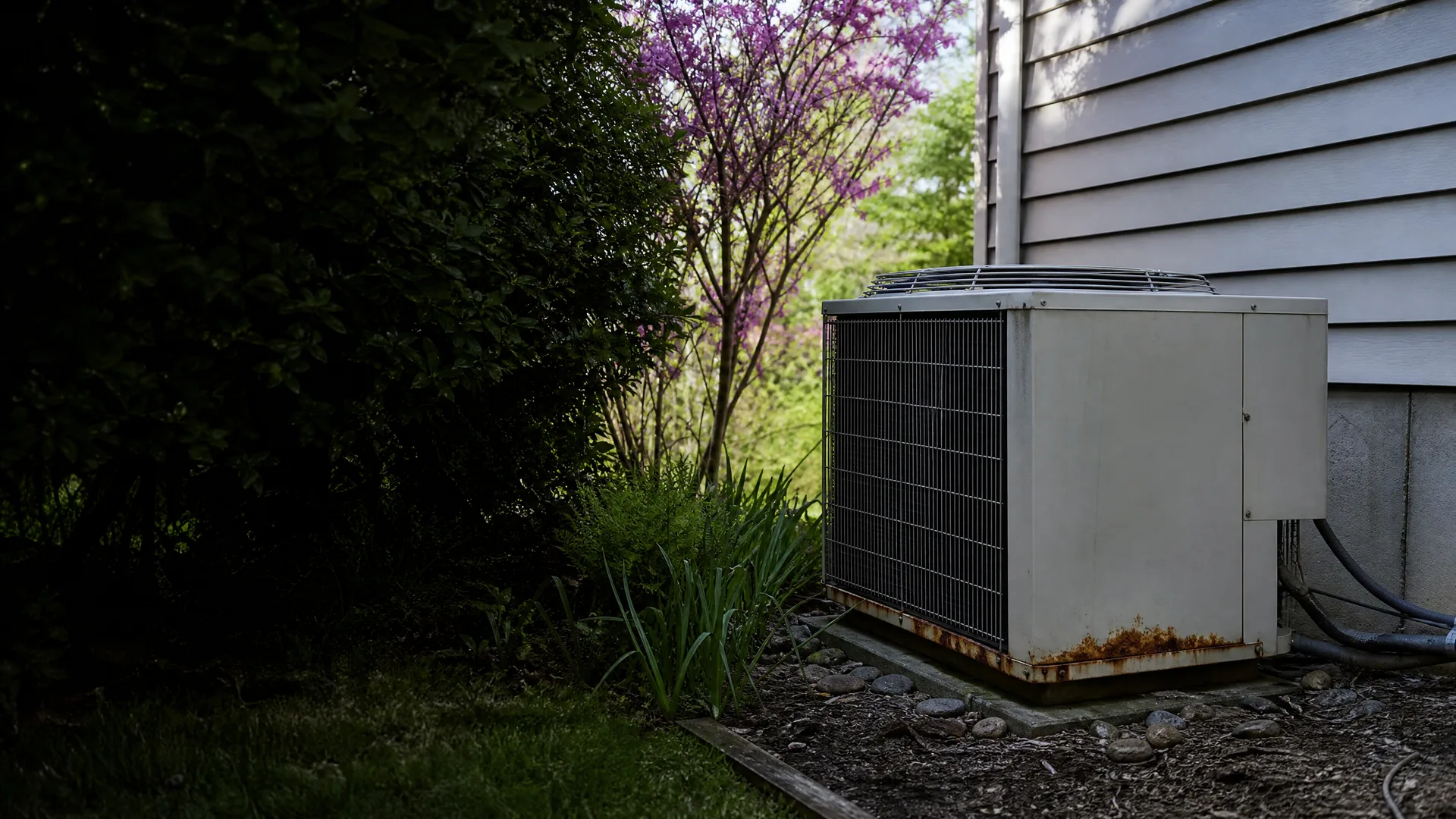
An outdoor air conditioning condenser unit with rust streaks sits on a concrete pad beside a light-colored lap-sided house, surrounded by shrubs, gravel and a flowering tree.

You go out to check the propane tank and stop by the unit on your way back. Rust runs along the base, flaking where the cabinet meets the pad. It's one of those spring days when the snow's finally off the ground and the air still has a bite to it in the shade. You crouch down and press a thumb to the metal near the bottom edge. It gives a little, softer than it should. Last July this thing ran most afternoons just to keep up with the humidity, and now you're doing the math on how many more Wisconsin winters it's got before that rust eats all the way through.

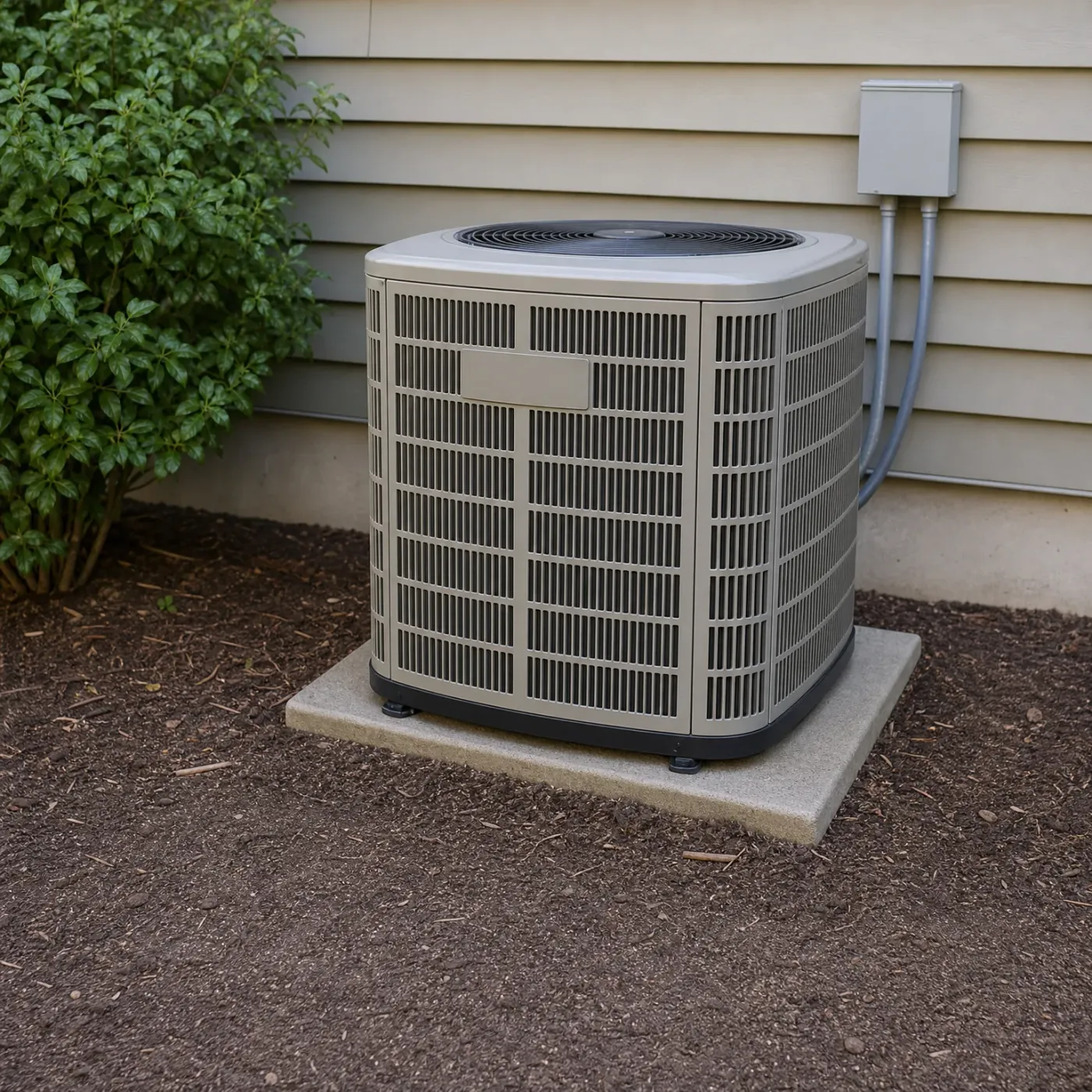
A beige outdoor air conditioning condenser unit on a concrete pad beside a house with horizontal vinyl siding, with refrigerant lines and a disconnect box on the wall, surrounded by dark mulch and a green shrub at left.
A heat pump running right here has clear coil fins and a clean cabinet, holding its own through a Wisconsin winter.
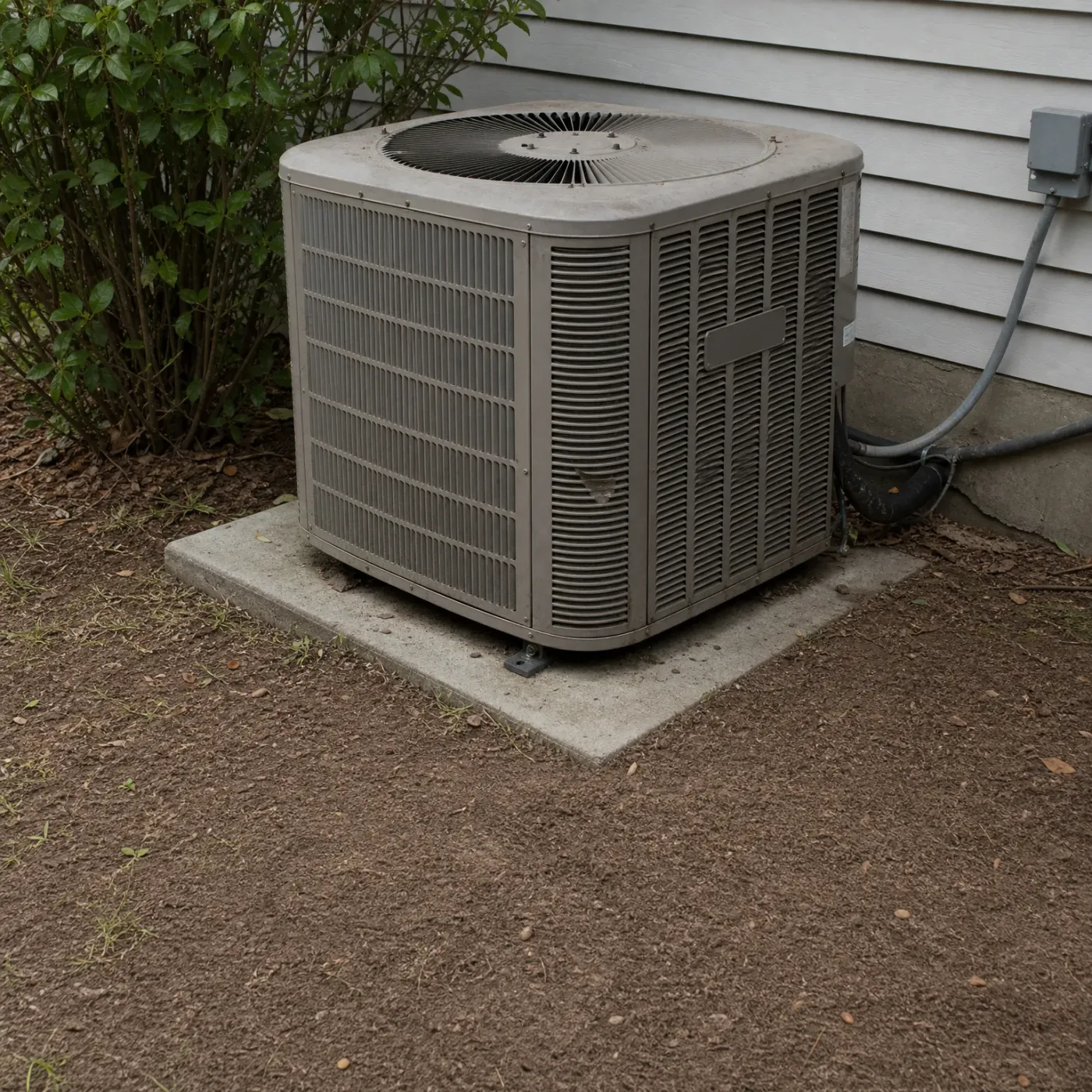
An outdoor air conditioner condenser unit on a concrete pad beside a house with horizontal lap siding, with a shrub to the left, bare dirt in front, and conduit and a metal disconnect box on the wall.
This one's crusted with ice past its coils and leaning off the pad, working harder than a Wisconsin winter should ask of it.

How a heat pump actually works

  • A heat pump moves heat instead of making it, which is why the compressor runs for longer stretches than a furnace burner would.
  • The reversing valve is what lets the same unit heat in January and cool in July by switching the direction refrigerant flows.
  • Below freezing, a heat pump has to pull heat out of colder outdoor air, so it works hardest exactly when Wisconsin winters hit their worst.
  • A defrost cycle runs periodically in winter to melt ice off the outdoor coil, briefly reversing the system before it switches back to heating.
  • Because the compressor cycles on and off far more than a gas furnace burner does, its wear adds up differently over the years.
  • A backup heat source kicking in often during cold snaps usually means the heat pump itself is struggling to keep up.

A furnace burns gas to make heat. A heat pump doesn't make heat, it moves it, pulling warmth out of the outdoor air and pushing it inside. That's a harder job once the temperature drops, which is exactly when your Wisconsin winter is asking the most of it. The reversing valve is what makes the same outdoor unit useful in July too. Flip the refrigerant flow one way and it heats your house. Flip it back and it cools it. That single part is why you only have one system to maintain instead of two.

Cold outdoor air also means ice builds up on the outdoor coil, so the system runs a defrost cycle to clear it. For a few minutes it reverses itself, sends warm refrigerant out to melt the ice, then switches back to heating. You might notice steam coming off the unit during this, which is normal.

All of this adds up to a different kind of wear than a gas furnace sees. The compressor in a heat pump cycles on and off more often and runs longer stretches in cold weather, since it has to work harder to extract heat from air that doesn't have much warmth to give. If you're seeing your backup heat kick in often during a cold snap, that's usually the heat pump telling you it can't keep up on its own anymore.

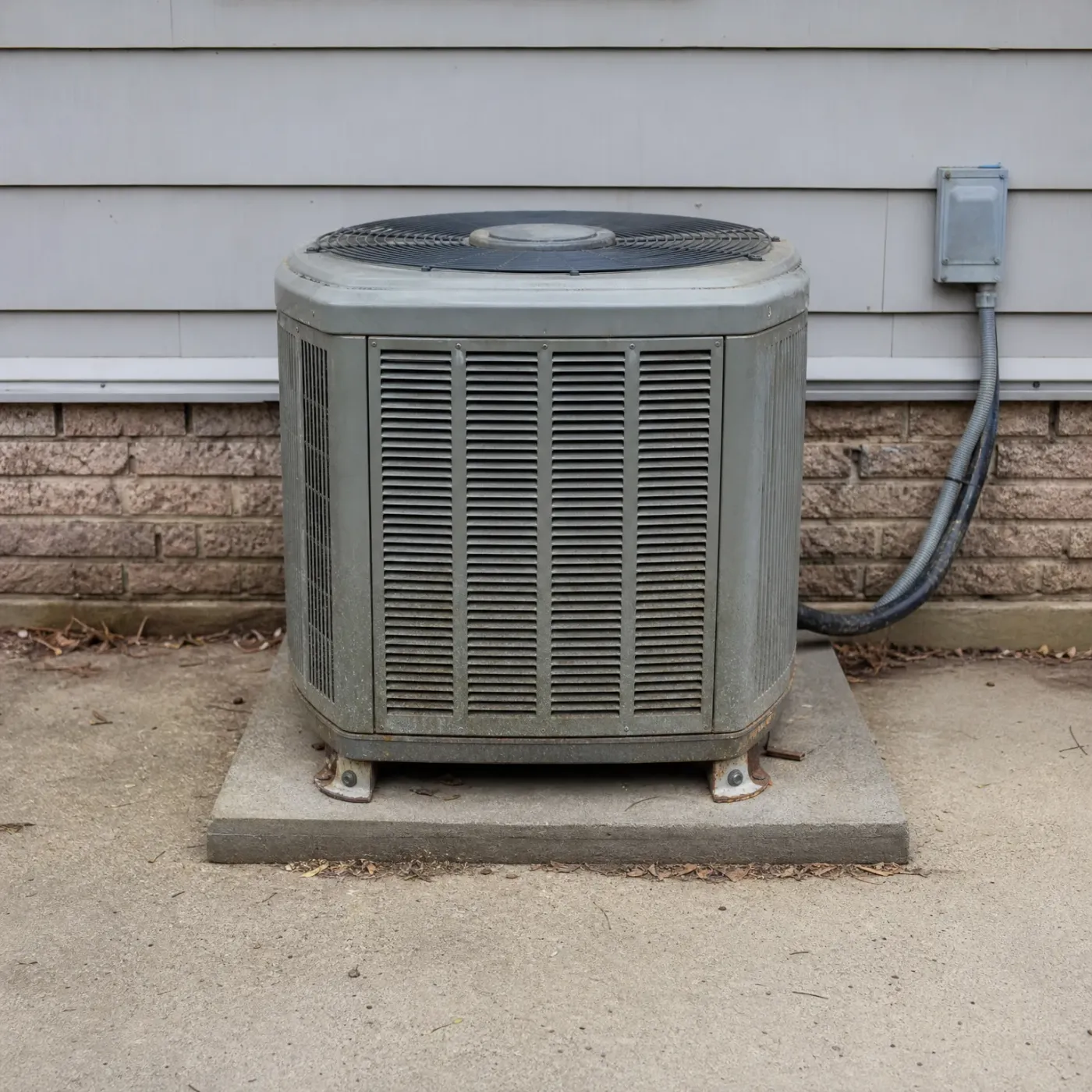
An outdoor air conditioning condenser unit on a concrete pad beside a house with horizontal siding above a brick foundation, with a flexible conduit running to a wall-mounted disconnect box.
Before you get your heat pump installation
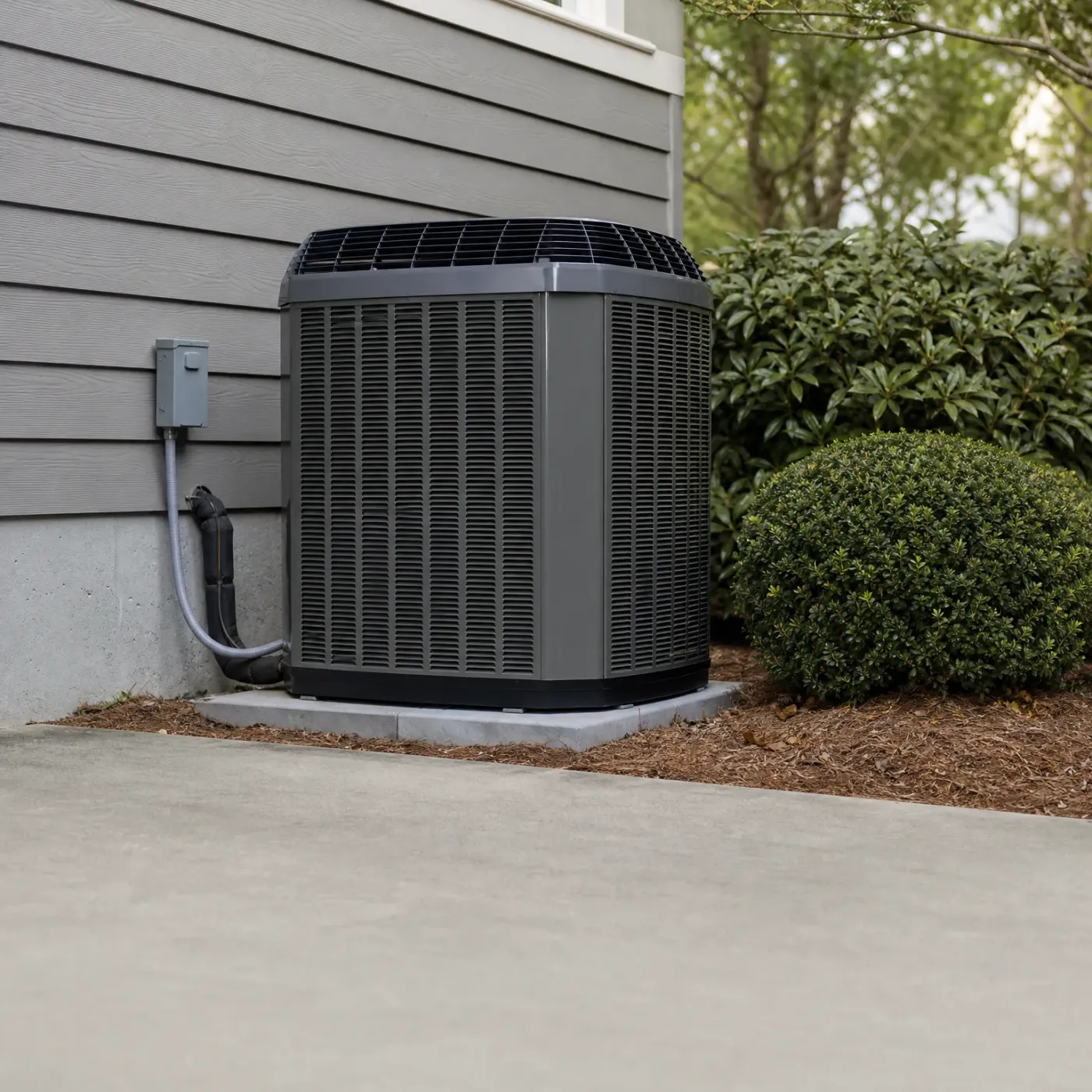
An outdoor condenser unit on a concrete pad beside a gray lap-sided house, with an electrical disconnect box and conduit on the wall and shrubs with mulch to the right.
After you get your heat pump installation
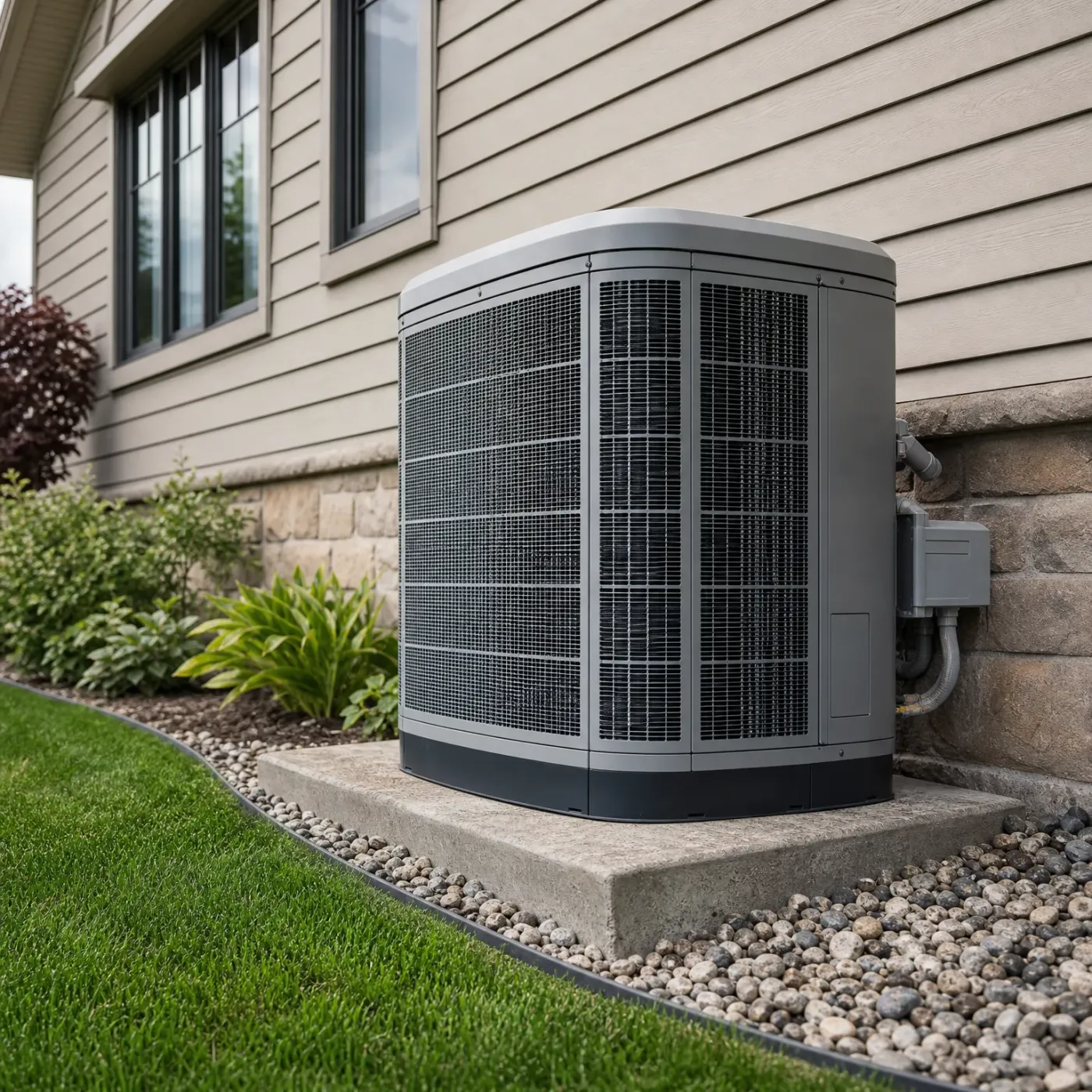
A gray outdoor condenser unit on a concrete pad beside a house with horizontal lap siding and a stone foundation, with a lawn, shrubs and decorative gravel nearby.

One request and it's handed off

Skip collecting and comparing quotes for the new heat pump.

One request ends the search for a heat pump installer.

Hand it over

It costs nothing to send, and you don't have to hire anyone.

A smiling bearded man in a dark green hooded jacket and blue t-shirt sits on a couch in a living room with shelves, a potted plant, and a bowl of popcorn on a wooden table.
A smiling man in a green long-sleeved shirt sits on a beige sofa in a living room, with a bowl of popcorn in the foreground, a large potted plant and shelving behind him.
A smiling man in a dark blue T-shirt sits on a couch in a dimly lit living room with a bowl of popcorn and a remote on a wooden table, a lit floor lamp and bookshelves behind him, and windows showing greenery.
A smiling bearded man in a dark green long-sleeved shirt sits on a leather couch in a living room, with a bowl of popcorn and a remote control on a wooden table in the foreground.

A heat pump doesn't run the same way all winter. When frost builds up on the outdoor coil, the unit switches direction for a few minutes to melt it off. The outdoor fan shuts off during that stretch while the compressor keeps going, so a hiss of steam or a steady hum outside isn't a problem, it's just defrost doing its job. Once the air outside gets too cold to pull much heat from, the system calls on backup, either electric heat strips or a gas furnace if that's what it's paired with. The thermostat manages that handoff, and in a setup that's working right, the backup takes over cleanly instead of running alongside the heat pump. None of this works well if the refrigerant charge is off. Even a small shortage makes the compressor run longer to reach the same temperature, and that extra strain adds up over a Wisconsin winter. The outdoor unit also needs open air on every side. If snow piles up against it, it has to work harder to pull heat out of the cold air at all.

How your heat pump handles winter

  • Defrost mode kicks in when the outdoor coil ices up, and the unit briefly reverses itself to melt that frost off.
  • During defrost the outdoor fan stops while the compressor keeps running, so a few minutes of steam or steady hum from outside is normal.
  • A heat pump in Wisconsin leans on its backup heat strips or a gas furnace once the outdoor temperature drops low enough that it can't pull enough heat from the air alone.
  • The thermostat decides when to bring in that backup heat, so a heat pump paired with a furnace should hand off the load smoothly instead of running both at once.
  • Refrigerant charge that's even slightly low forces the compressor to run longer to hit the same temperature, which wears it down faster over a Wisconsin winter.
  • The outdoor unit needs clear airflow on all sides to pull heat out of cold air, so anything stacked against it during a snowy month makes it work harder.
A woman in a dark gray sweater reclines on a couch with her eyes closed and a knit blanket over her lap, an open book resting face-down in front of her, with a lit table lamp and shelving blurred in the background.
A bearded man in a dark navy sweater over a collared shirt smiles and looks off to the side while seated at a dinner table with a glass of red wine, a lit candle, and a plate of food in the foreground of a dimly lit room.
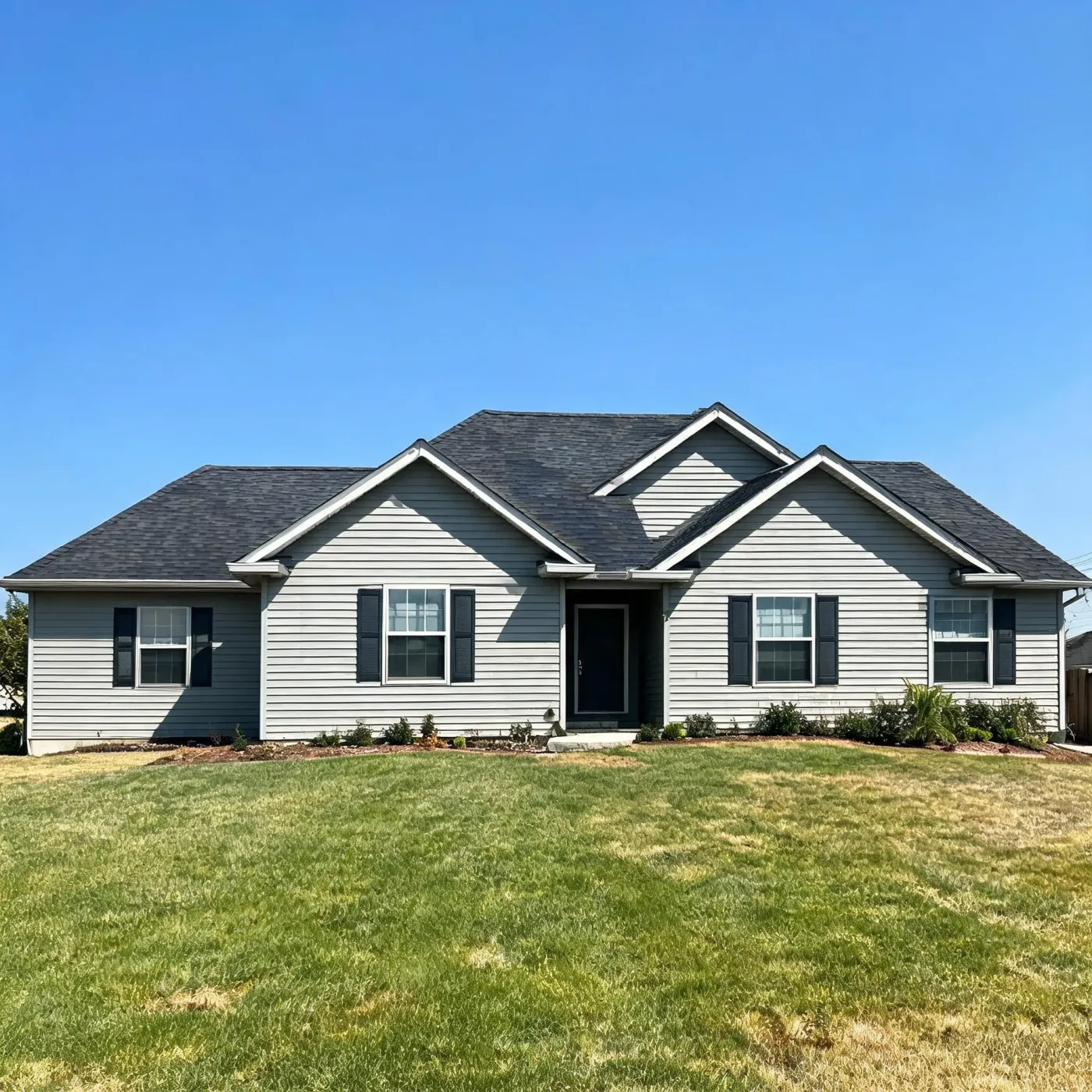
A single-story house with light gray horizontal siding, dark gray shingled gables, black shutters and a dark front door, fronted by a mulched bed of small shrubs and a large lawn under a clear blue sky.

A summer dew point of 60°F is what this comes down to, averaged across June, July and August over where Wisconsin homes sit, per NOAA climate data. That's sticky enough that your heat pump isn't just lowering the temperature, it's pulling real moisture out of the air to keep the house from feeling damp. That extra work falls on the compressor, the same part that's already carrying your winters. Run it hard enough summer after summer and it shows up sooner in how the unit sounds and how long it lasts.

NASA POWER T2MDEW county cells weighted by homes

A wooden table in the foreground holds a closed laptop and a ceramic mug of coffee, with a spindle-back wooden chair behind it, a beige wall with paneled wainscoting, a window at left, and a kitchen counter with a cutting board, bowl of fruit and greenery at right.

What an aging heat pump costs you at home

An older heat pump shows up on your power bill before it shows up anywhere else. Power in Wisconsin isn't cheap, and a unit that's lost efficiency runs longer to hold the same temperature, especially on the coldest nights when it's working against the gas furnace split most of your neighbors rely on. You'll notice rooms that used to heat evenly staying a few degrees off, or the system running through a cycle you'd swear used to be shorter.

There's also what happens if it quits outright during a cold snap, which is when most of them do. Then you're the one calling around, explaining the make and model to whoever picks up, waiting on quotes, trying to tell a fair price from a bad one with no one to compare notes with. Send the form instead and that search stops being your problem. You stop sorting contractors and start waiting on the one who's already been matched to your house.

A dark ceramic mug on a round wooden table beside a light grey sofa with a woven cushion and knit throw, with a window, potted plant, floor lamp and wooden cabinet blurred in the background.
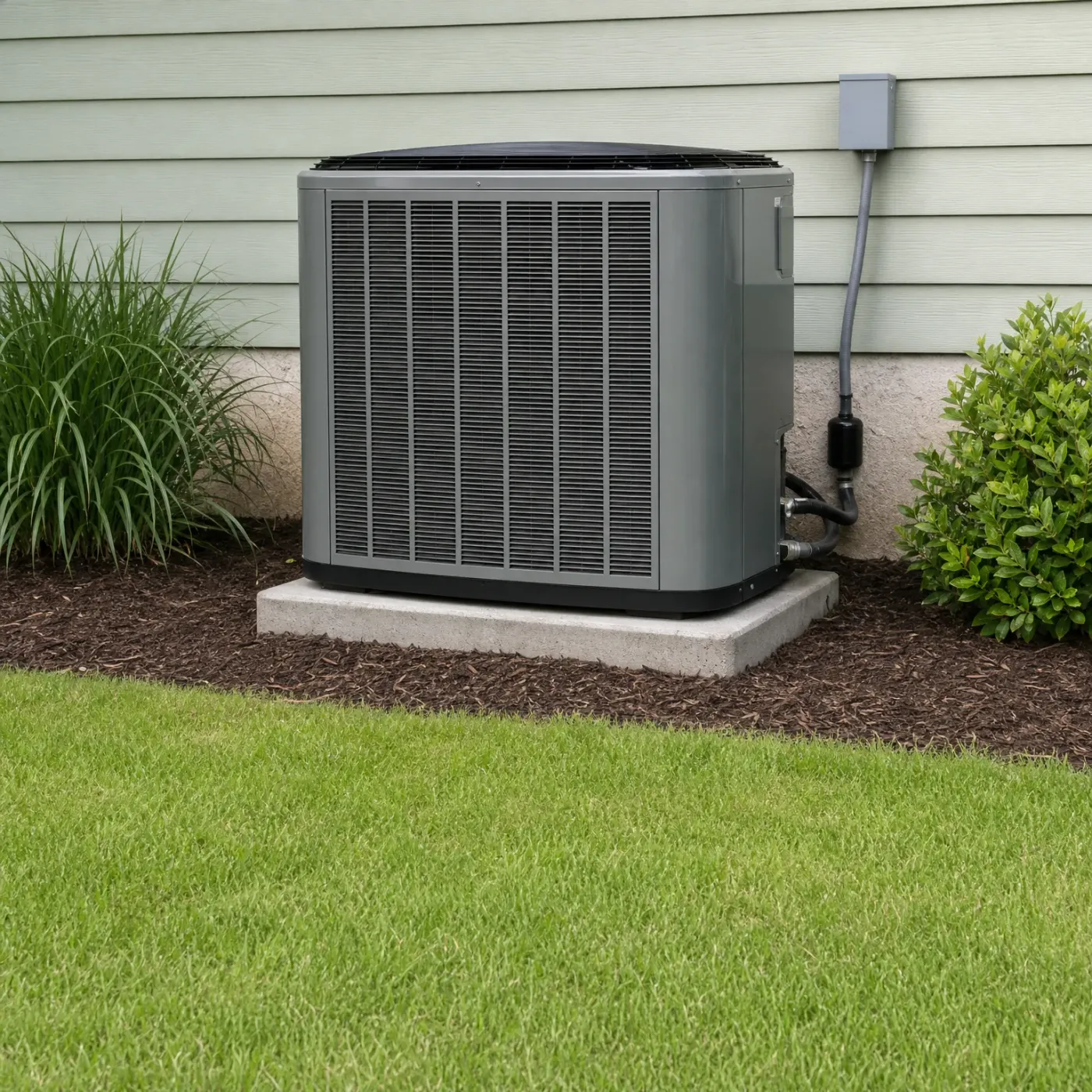
A gray outdoor condenser unit on a concrete pad beside a light-green sided house, surrounded by mulch, ornamental grasses and a shrub, with mowed lawn in the foreground.

Clear fins, no sign of strain

The mulch and grass around this one are undisturbed, the fins are clean, and the disconnect box sits untouched on the siding. A unit kept clear like this moves air the way it was designed to, through a Wisconsin winter and the sticky months after it.

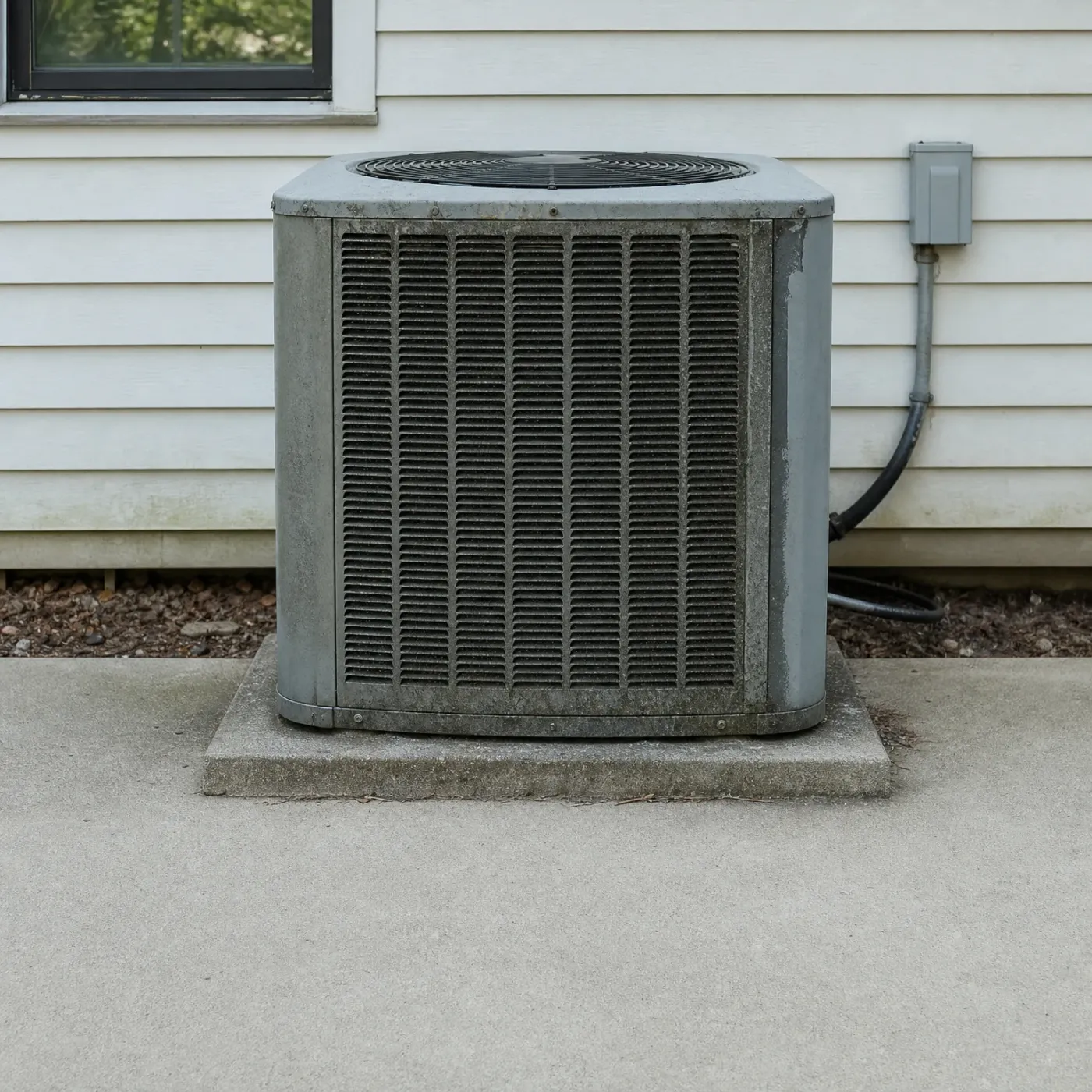
A gray outdoor air conditioning condenser unit on a concrete pad beside a house with light vinyl siding, with a gray electrical disconnect box and conduit on the wall to the right.

Grime building up on the coil

Dirt has settled into the fins here and it shows in the discoloration across the cabinet. A heat pump working through buildup like this pulls harder to move the same air, and that strain adds up over a Wisconsin winter.

Power costs 18.08 cents per kilowatt-hour statewide

At 18.08 cents a kilowatt-hour, every extra hour your heat pump runs to make up for lost efficiency shows up on the bill fast. A unit holding its original output keeps those hours down, which matters more here than in states where power costs less.

EIA-861 2025 statewide residential average

A heat pump in Wisconsin lasts about as long as the one in any other cold state, somewhere in the range a well-kept unit should reach, but winters here and power bills that run 18.08 cents a kilowatt-hour make the back half of that life expensive if the unit's falling behind. Rust at the base, ice that won't clear, a hum that wasn't there last year, these tell you more than a birth year on a sticker. If yours is showing them, the question isn't really how long heat pumps last. It's whether this one still has enough left to be worth the next bill. Sorting that out usually means calling a few contractors, explaining what the unit's doing each time, and waiting on quotes to come back so you can compare them against each other. Send this page's form instead and that part's done. You're not left making the calls or doing the comparing. You just hear back from someone who can look at what you've got and tell you where you stand.

An outdoor air conditioning or heat pump condenser unit on a concrete pad beside a gray horizontal-sided house, with a disconnect box and conduit on the wall and dark shrubbery to the left.

Done looking for a heat pump pro

Step 1 of 3: Equipment