Repair or replace a heat pump in Wisconsin

Step 1 of 3: Equipment

Should I repair or replace my heat pump in Wisconsin?

Your heat pump is giving you trouble again, and before you spend money on another repair call you want to know if that money is better put toward a new system. In Wisconsin, where the heat pump has to work through real cold and not just the muggy summers, that question matters more than it would somewhere milder.

Repair it if the system is still young and the fix is minor. Replace it if the compressor is failing or the repairs keep coming back.

A heat pump in Wisconsin earns its keep year round, cooling the house when it's sticky out and pulling double duty against the cold the rest of the year. That workload wears on a system faster than it would somewhere with a shorter summer and a milder winter, so by the time a unit is older, a breakdown is often a sign the next one isn't far off. A single repair, especially something small like a capacitor or a blown fuse, usually makes sense on its own. A compressor failure, a refrigerant leak in an older unit, or a system that's needed three service calls in as many years points toward replacement instead, because at that point you're paying to keep an old machine limping along rather than putting that money toward one that will actually hold up to another Wisconsin winter.

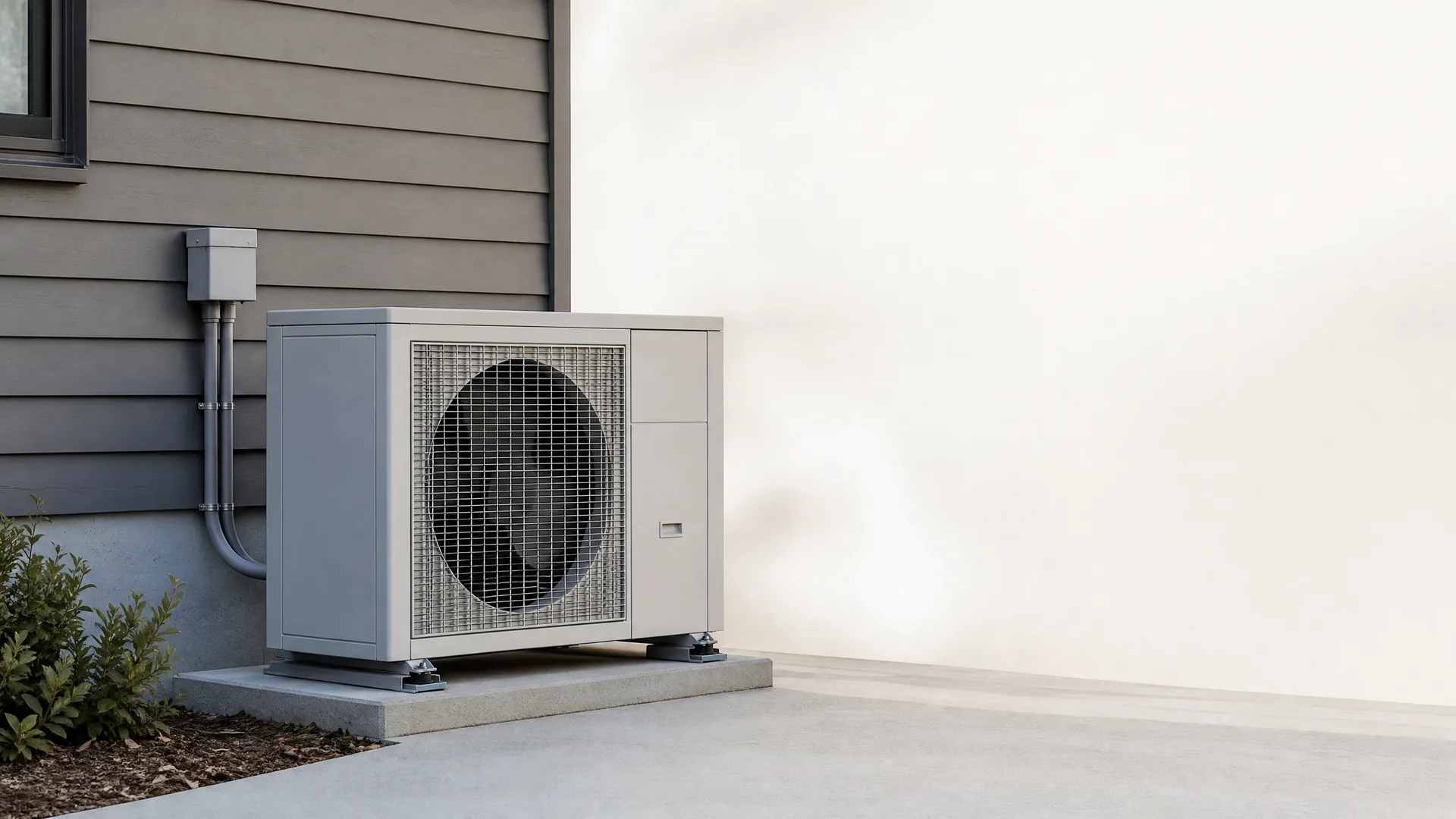
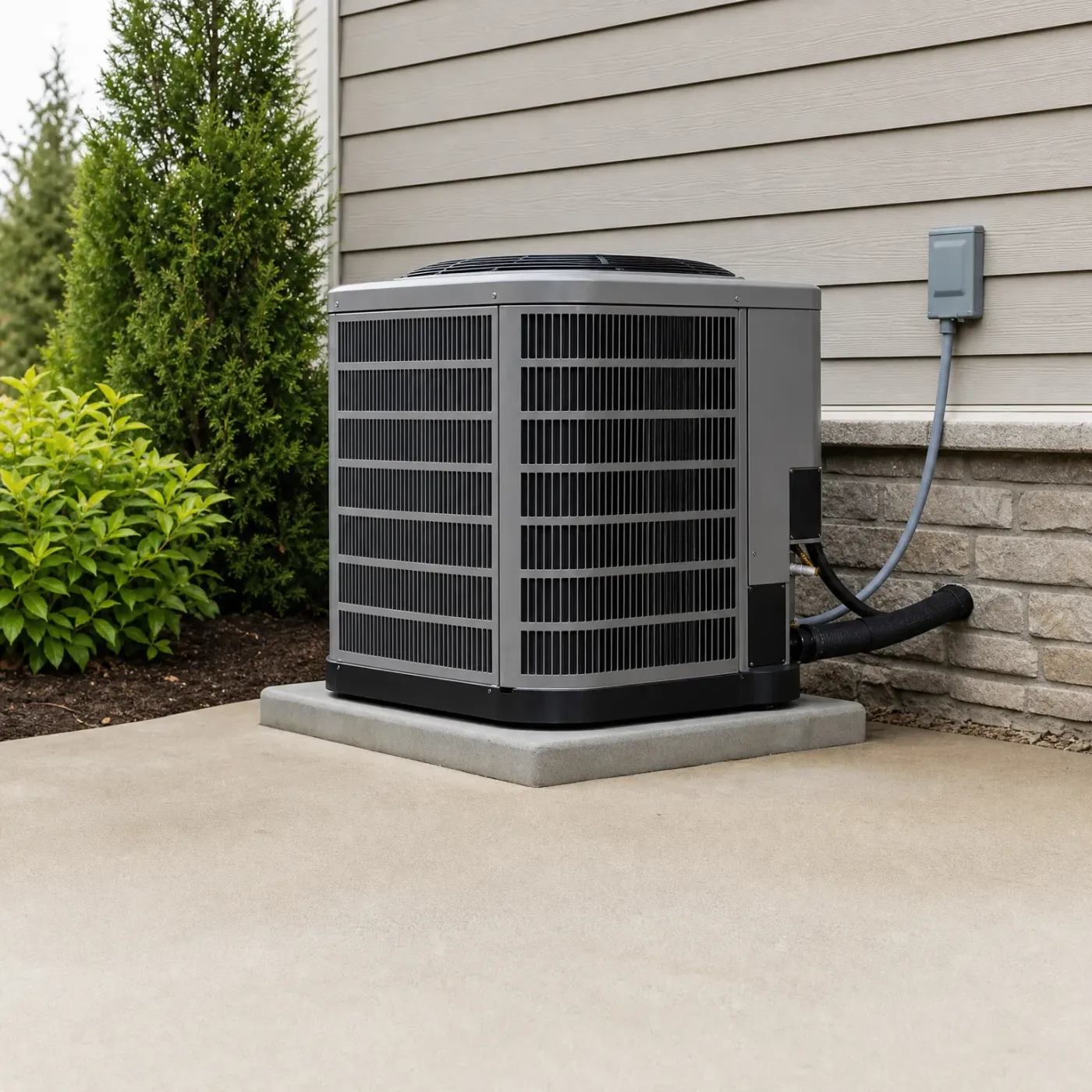
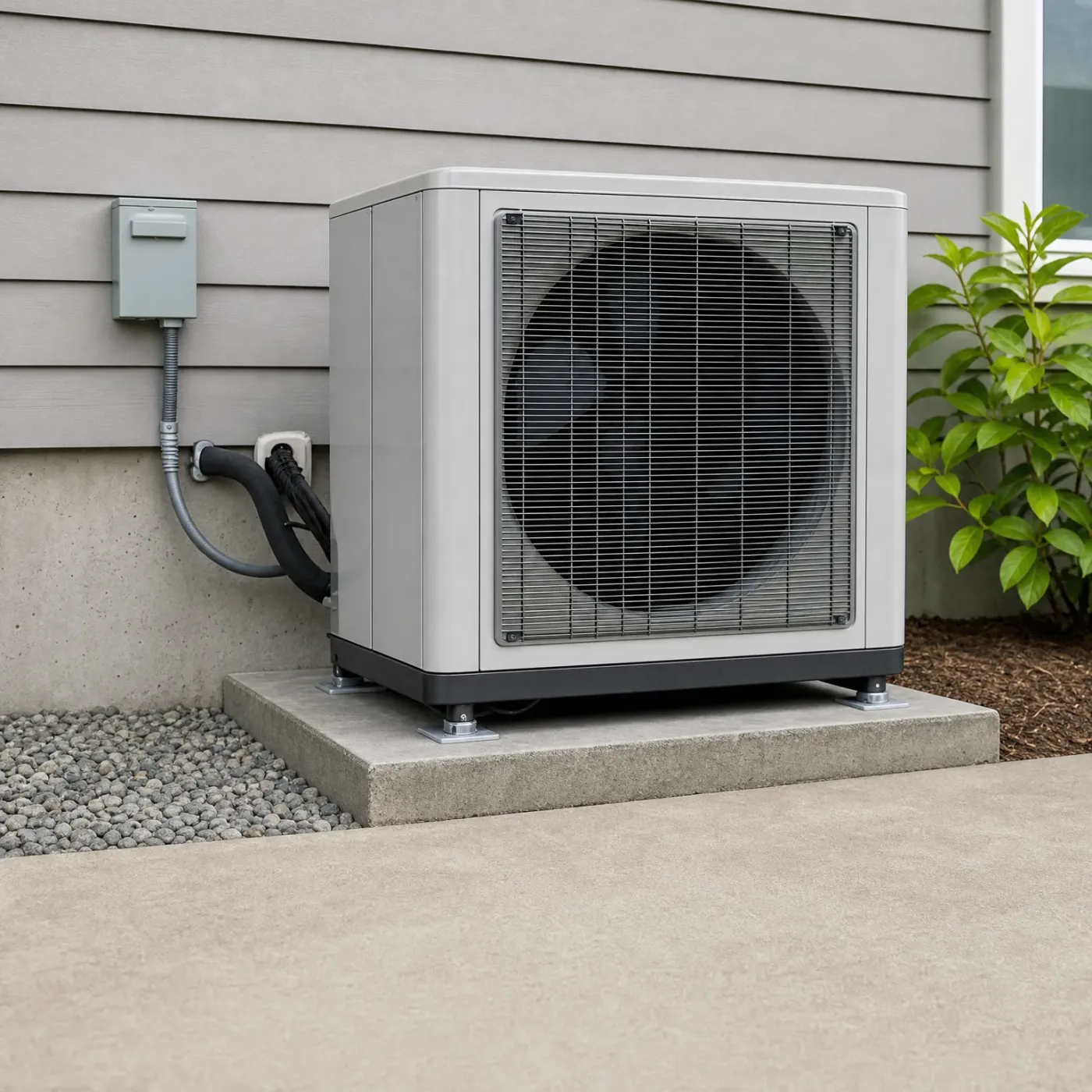
A light gray outdoor heat pump unit mounted on a concrete pad beside a house with horizontal lap siding, with refrigerant lines and conduit running to a wall-mounted electrical box, gravel and a leafy shrub nearby.

Running the way it should

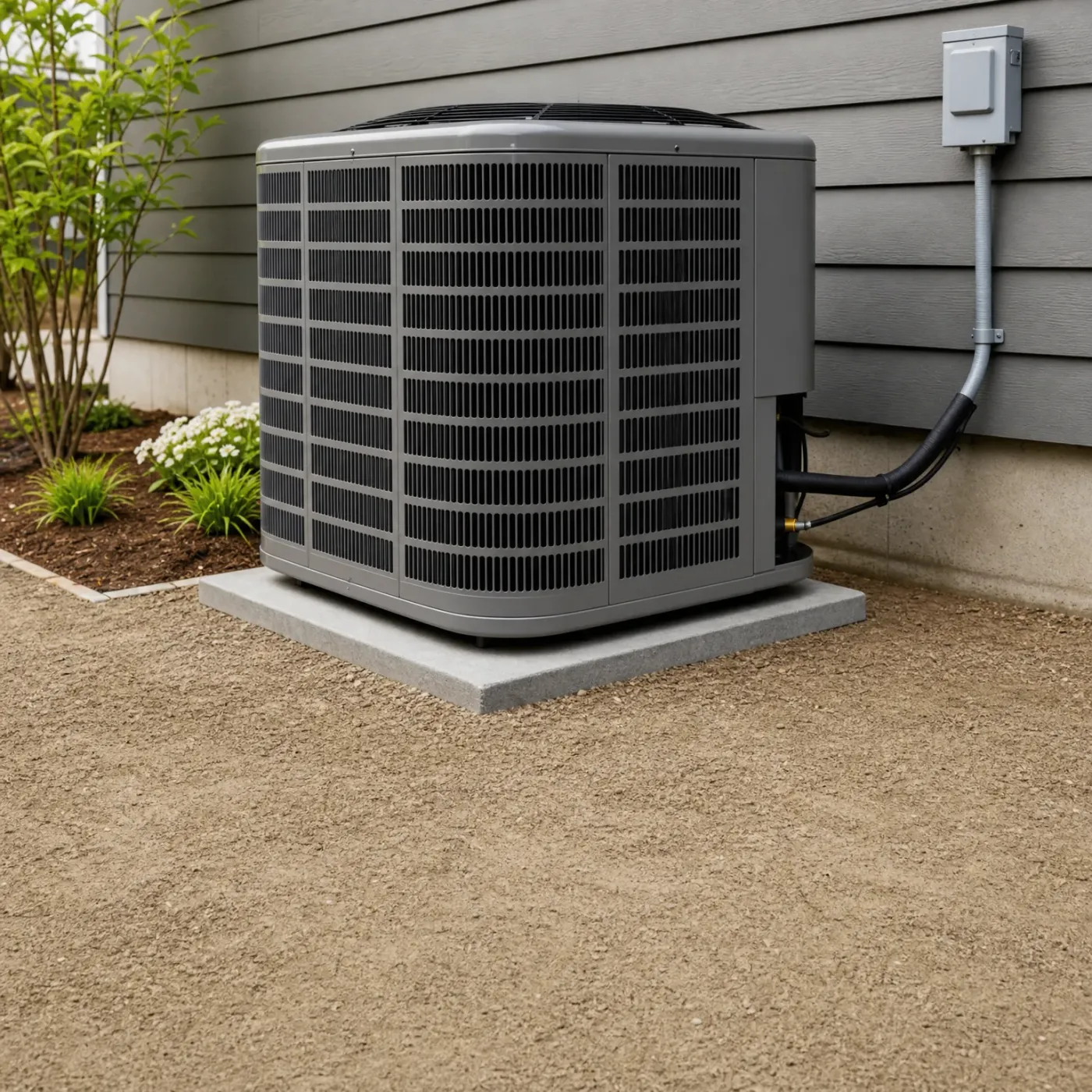
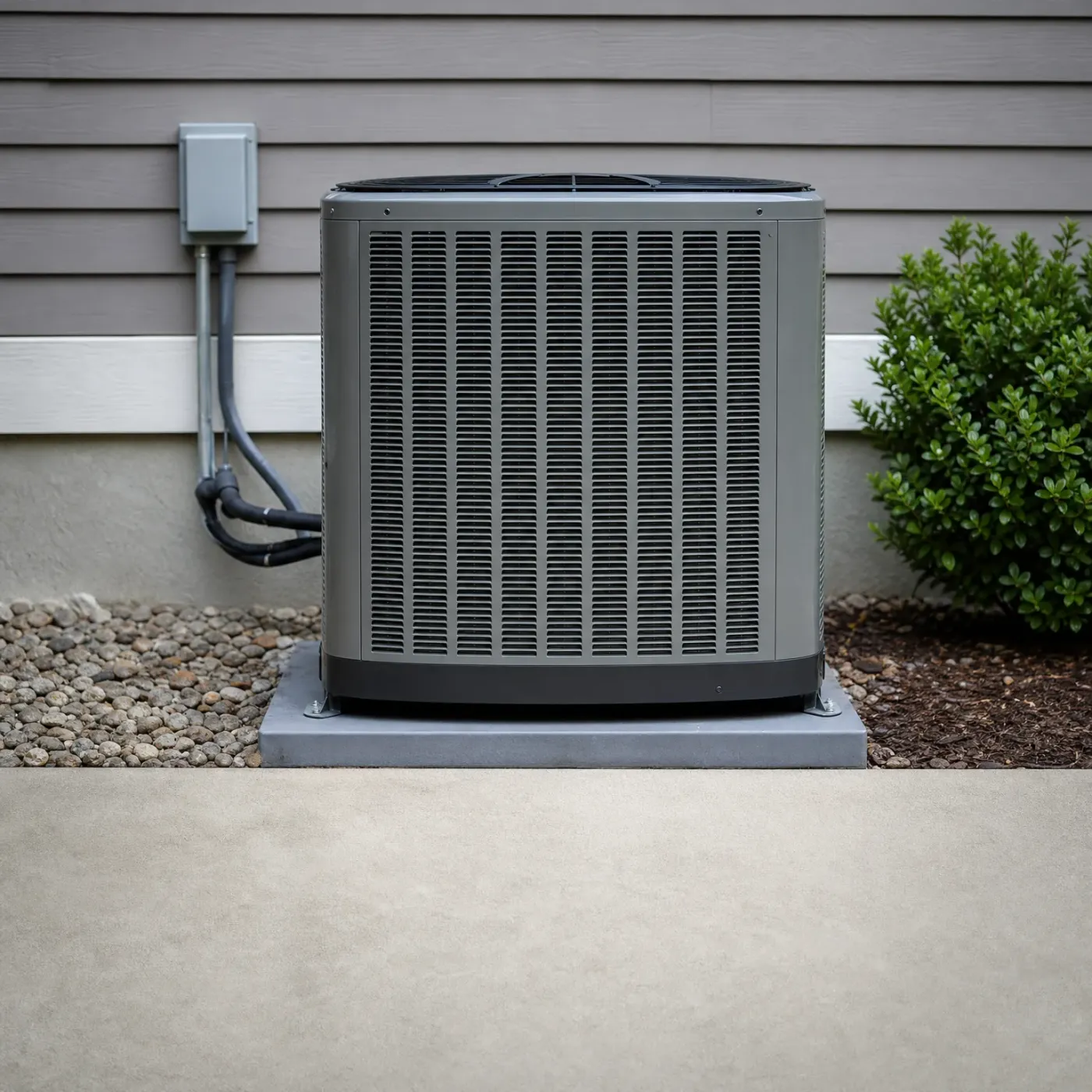
A heat pump that's working right sits quiet on its pad, lines and wiring running clean to the disconnect box. It cycles on, moves heat in or out, and cycles off without a fuss. No ice on the coil in January, no strain in August when the humidity sits heavy on everything.
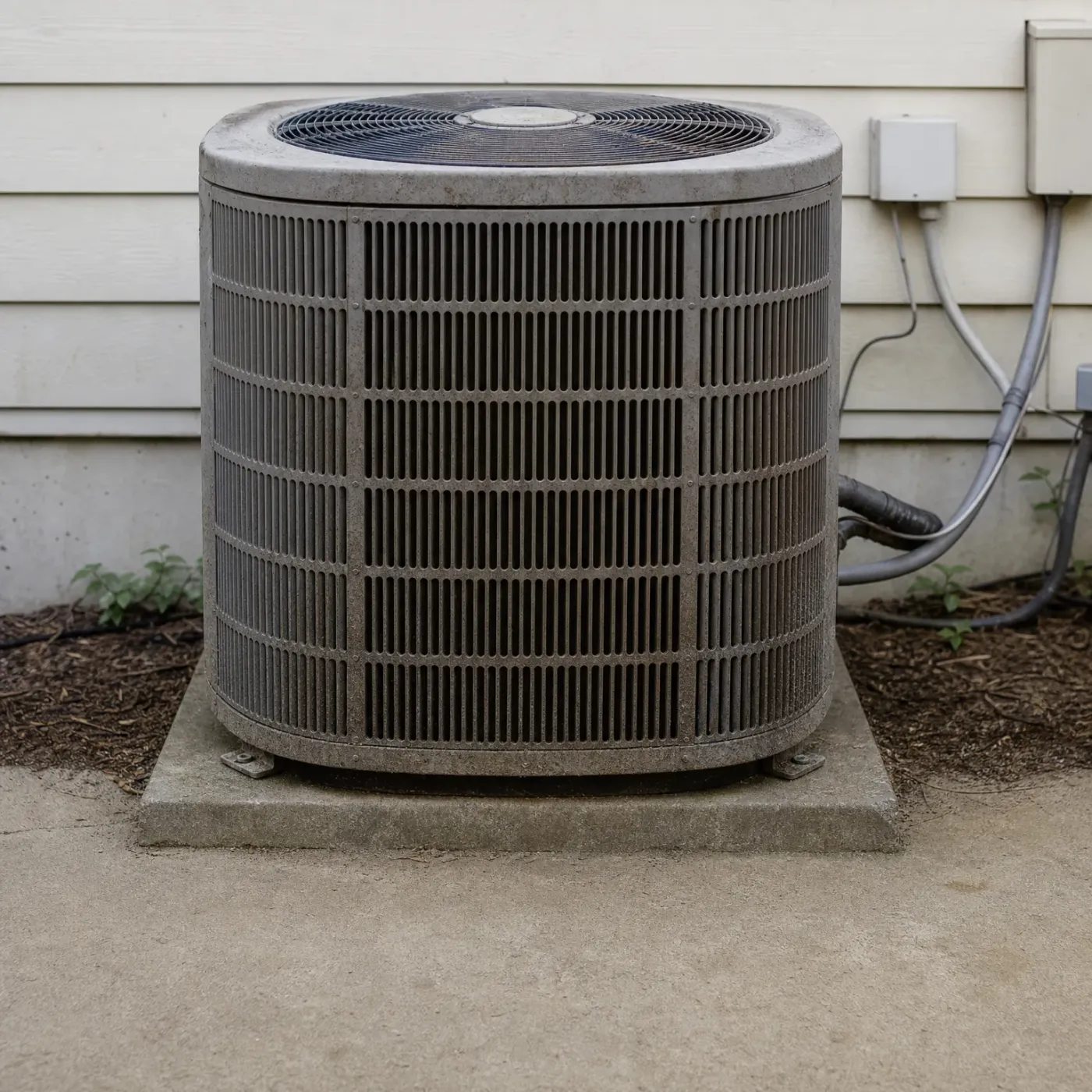

An outdoor air conditioner condenser unit on a concrete pad beside a house with horizontal siding, with conduit, cables and an electrical box on the wall and mulch beds at either side.

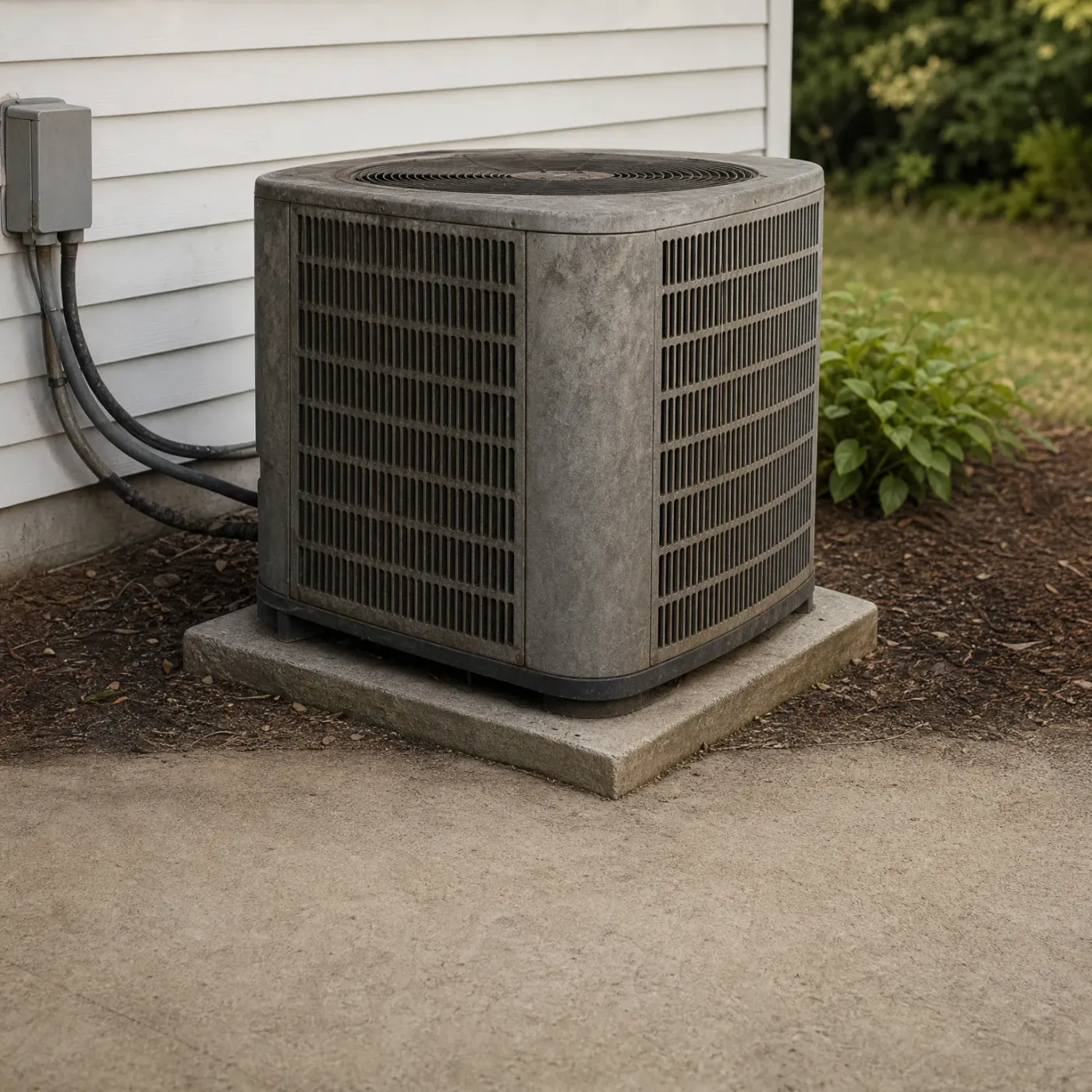
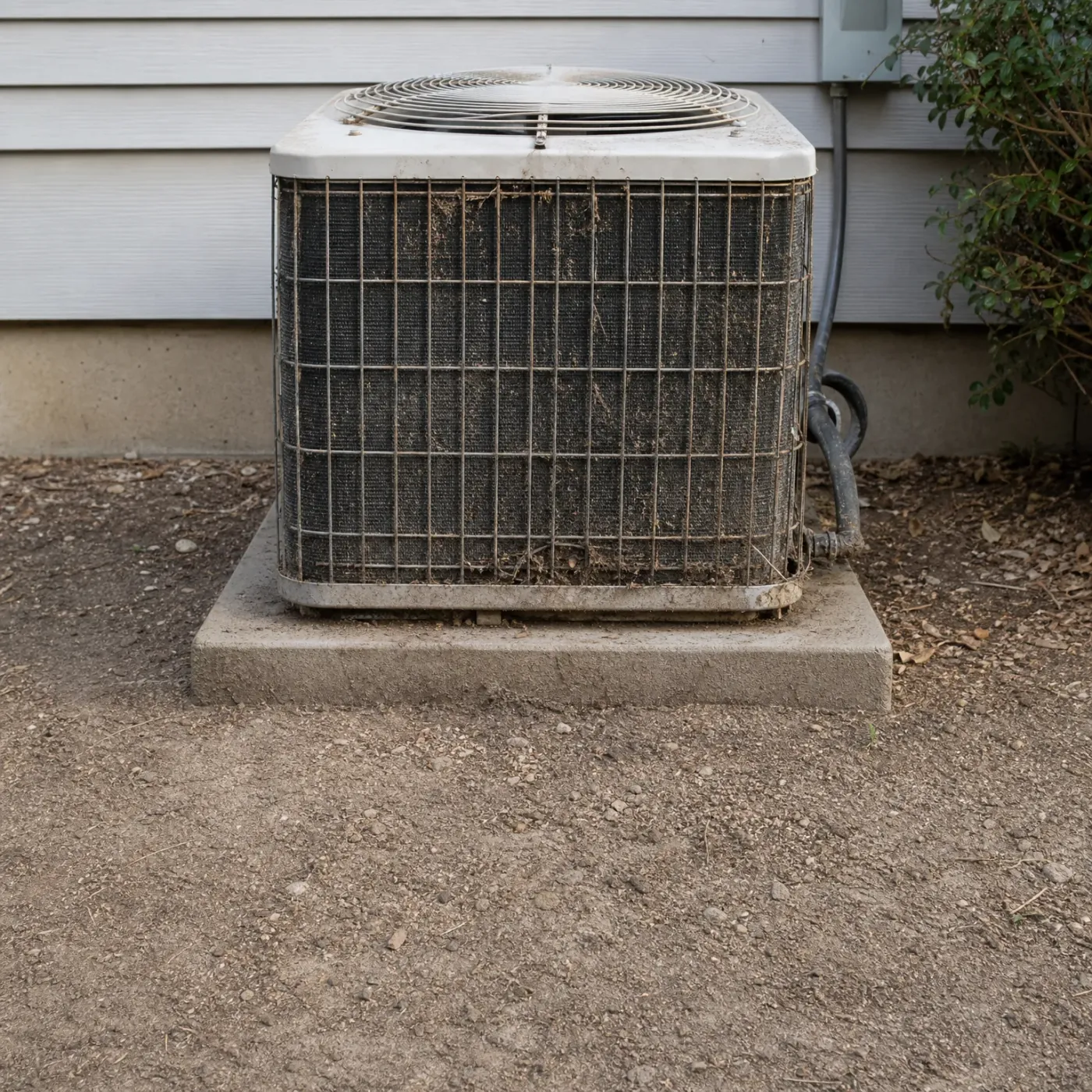
Showing its age

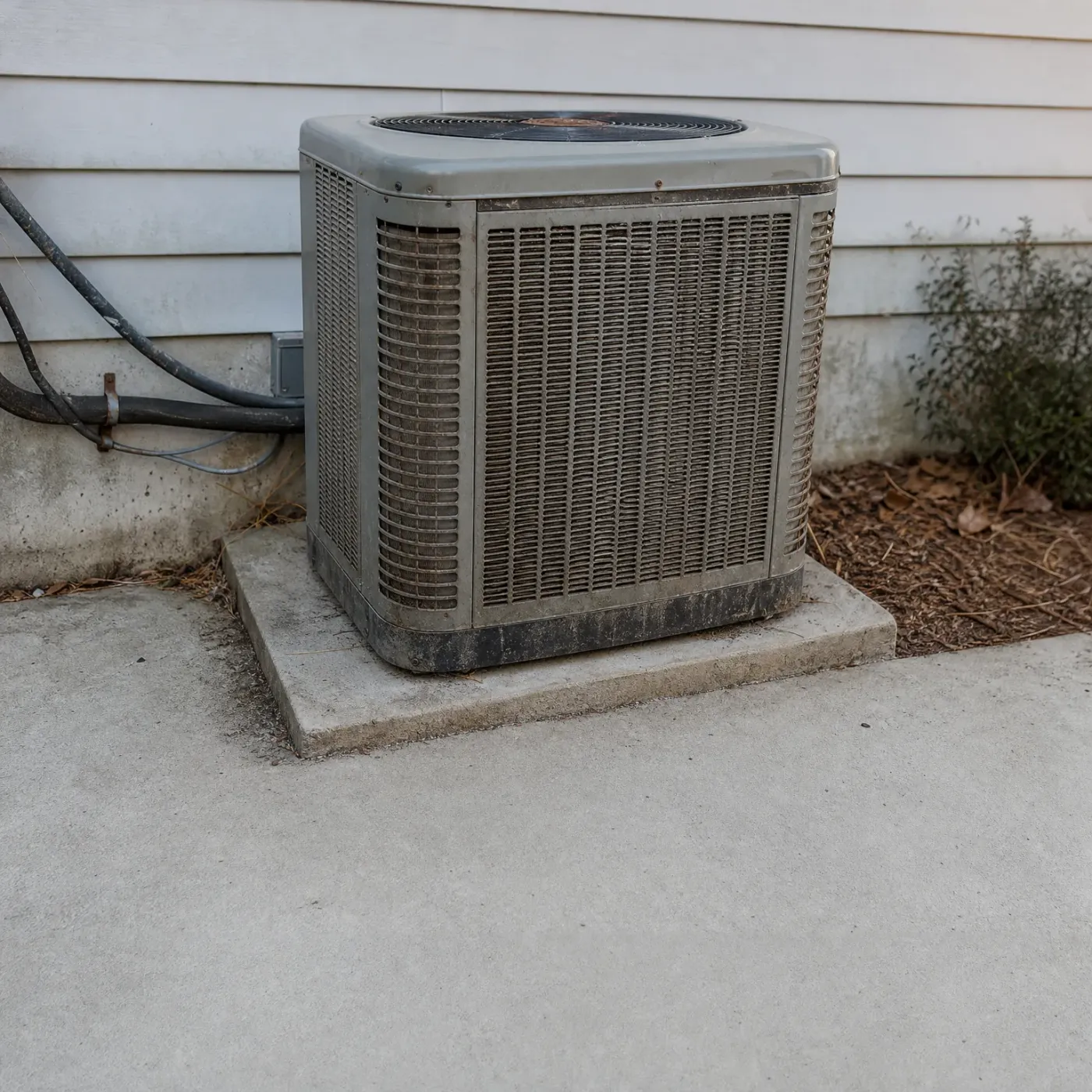
Grime and dust built up over the cabinet is a sign the unit has been working harder than it should, pulling air through a coil that can't breathe. A heat pump in this shape is often also older, and once the repairs start stacking up, it's worth asking a contractor whether you're fixing a system or just delaying the next breakdown.

A gray-haired, bearded man in a dark coat dusted with snow stands smiling in a dimly lit room with a lamp, mirror, framed art, and a sofa in the background.
An older man with white hair and a beard, wearing a dark snow-dusted coat and scarf, stands in a warmly lit interior hallway with a framed landscape picture, a table lamp and a potted plant behind him, and a snowy view through a window at left.
An older man in a dark snow-flecked overcoat and scarf stands smiling in a warmly lit home entryway, with a glass-paned door showing darkness outside and a lamp-lit room visible through a doorway behind him.
An older man with gray hair and a beard, wearing a dark snow-dusted jacket and scarf, stands smiling in a warmly lit interior hallway with a lit table lamp, a vase of dried branches, and a framed picture in the background.

Why the repair bill adds up fast

A heat pump in Wisconsin runs most of the year, cooling from roughly May through September and then switching over to carry some or all of the heat once it turns cold. That's double duty a furnace-only system never sees. The reversing valve, the defrost control board, the outdoor fan motor all see more hours of work than they would in a milder state. When one of those parts fails on an older unit, you're often looking at a repair that only holds until the next part gives out, since the rest of the system has logged the same hours.

What a new system changes

A new heat pump is matched to run efficiently through both Wisconsin's humid summers and its cold months, which matters here since electric rates run high and a struggling compressor or low charge will show up on your power bill long before it fails outright. Replacing the unit resets that clock. You get a system sized and charged correctly from the start, with a defrost cycle and reversing valve built to handle the swing between a July afternoon and a January morning without the strain an aging unit carries into both.

Power costs 18.08 cents per kilowatt-hour statewide

At 18.08 cents per kilowatt-hour, every hour your heat pump struggles to keep up costs you more than it should. A unit low on charge or icing over has to run longer to do the same job, and in Wisconsin that shows up fast on the bill.

EIA-861 2025 statewide residential average

A gray outdoor heat pump unit on a concrete pad beside a house with gray horizontal siding, with conduit and an electrical box on the wall and a shrub at left.

What a struggling heat pump does to your bill

If your heat pump is losing the fight against a Wisconsin winter, you'll likely see your gas furnace kick on more to pick up the slack, and you'll feel it in both bills at once. A unit that short cycles or runs constantly to hold temperature is pulling power the whole time it's doing it. At what you're paying per kilowatt-hour here, a system working harder than it should turns into real money before the season's out.

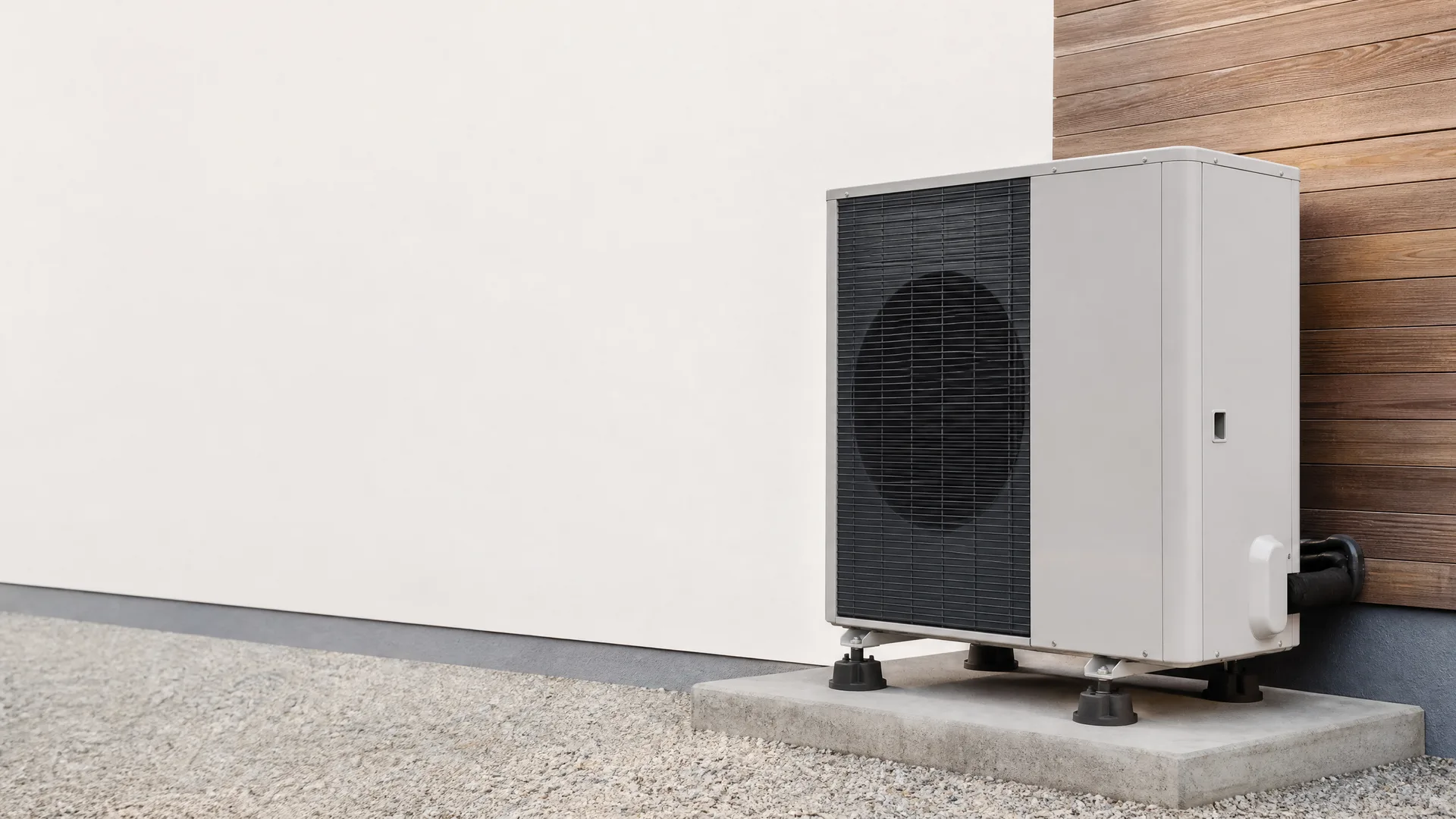
An outdoor air-source heat pump unit with a dark grille stands on a concrete pad beside a white wall and wood-clad facade, surrounded by gravel.

What's at risk if you wait too long

A heat pump that keeps freezing up or won't defrost properly can send liquid refrigerant back to the compressor, and that's the part that costs the most to replace on its own. Ignoring a failing defrost board or a slow leak doesn't just mean more repair calls. It means the one component that makes the whole system worth keeping could go out first, and at that point you're buying a new unit anyway, just later and with less choice in the matter.

Fix It or Replace It

Repair

  • A capacitor, contactor or defrost board is a contained job, and the heat pump goes back to working the way it did before.
  • If the unit is still under manufacturer or labor warranty, a repair may cost you little beyond the service call.
  • A system that's only a few years into its life has no reason to come out over one failed part.
  • Repairing now buys you time to plan a replacement on your schedule instead of in the middle of a cold snap.
  • If this is the first real problem the unit has had, there's no pattern yet that says more is coming.

Replace

  • A heat pump that's iced up or short cycling every winter is telling you the fixes aren't holding, and the next repair likely won't either.
  • Once you're paying for a service call every season, that money is going toward keeping an old unit alive instead of toward one that works.
  • A unit that can't keep up in a Wisconsin winter is leaning harder on your gas furnace, and you feel that in both bills.
  • Parts for an older heat pump can be slow to get or no longer made, which stretches out every repair that follows.
  • At 18.08 cents per kilowatt-hour, a system running longer than it should to make up for lost capacity adds up fast.
  • A new heat pump sized and installed for how Wisconsin winters and summers actually run gives you one less thing to keep troubleshooting.
A gray outdoor condenser unit on a concrete pad beside a house with horizontal lap siding, with an electrical disconnect box and insulated refrigerant lines on the wall, gravel in the foreground and a planting bed at left.

Working as it should

A heat pump in good shape sits clean on its pad, lines and conduit running straight to the disconnect box. The fins stay clear and air moves through them the way they're built to. It switches between cooling and heat without a fight, summer or winter.

A weathered gray outdoor condenser unit sits on a concrete pad beside a house with horizontal siding, with refrigerant lines entering the wall at left and a mulched shrub bed at right.

Worn down and struggling

Dirt and grime packed into the fins and base block the airflow the unit needs to move heat in or out. A coil caked like this makes the system run longer to do the same job, and in a Wisconsin winter that strain shows up as a bigger bill and a shorter life for the unit.

An outdoor air conditioning condenser unit sits on a concrete pad beside a white horizontal-siding house, with a gray electrical disconnect box and insulated refrigerant lines on the wall, mulch and green shrubs to the right, and a concrete slab in the foreground.
Before you get your heat pump installation
A gray outdoor air conditioner condenser unit on a concrete pad beside a house with horizontal lap siding and a stone veneer base, with a conduit running to a wall-mounted disconnect box and shrubs and evergreen trees to the left.
After you get your heat pump installation

Get the right pro for your heat pump

You've been through the repair numbers, the defrost cycle, the age of the unit, maybe a second opinion. At some point the decision stops being about parts and starts being about who you let into your house to do the work. Getting there usually means calling a handful of contractors, telling each one the same story about the ice on the coil or the compressor that won't start, then sitting on quotes that are hard to compare because no two of them priced the same thing. With power running 18.08 cents a kilowatt-hour here, a new system sized wrong or installed poorly costs you twice, once at purchase and again every month after. A heat pump that has to carry part of a Wisconsin winter on top of a Wisconsin summer isn't a small install to get right. Handing the search off now means you stop chasing callbacks and start talking to someone who already knows what you're dealing with.

How a heat pump actually works

  • A heat pump moves heat instead of making it, pulling warmth out of outside air even when it's cold and pushing it indoors.
  • The reversing valve is what lets it switch between cooling your house in summer and heating it in winter, and it's a common failure point.
  • Below a certain outdoor temperature the unit can't pull enough heat from the air, which is why most Wisconsin homes pair a heat pump with a gas furnace.
  • A defrost cycle runs automatically in winter to clear ice off the outdoor coil, briefly reversing the system and running the fan slower or not at all.
  • The outdoor unit has a compressor and a fan, and both have to work together for the system to move heat efficiently in either direction.
  • A heat pump sized too large for the house will short cycle, turning on and off too often instead of running steady.

A heat pump doesn't burn anything to make heat. It moves heat from one place to another, and that's true whether it's running in July or January. In summer it pulls heat out of your house and sends it outside, the same job a central air conditioner does. In winter it runs the cycle backward, pulling what heat it can out of the cold outside air and pushing it in through the indoor coil. The reversing valve is what flips that direction, and when it sticks, the system gets stuck in one mode no matter what the thermostat asks for.

Cold air still holds some heat, down to a point. Once the outdoor temperature drops low enough, there isn't enough heat left in the air for the unit to pull out efficiently, which is why most homes in Wisconsin run a gas furnace alongside the heat pump rather than relying on it alone through the coldest stretch.

Ice builds on the outdoor coil when it's cold and humid out, so the system runs a defrost cycle to clear it. You might notice the outdoor fan slow or stop and steam rise off the unit for a few minutes. That's normal.

Everything depends on the compressor and the outdoor fan working together. If the fan can't move enough air across the coil, or the compressor can't keep pressure where it needs to be, the whole system loses ground, in either direction.

A gray outdoor condenser unit on a concrete pad beside a house with horizontal lap siding, with a metal disconnect box and refrigerant lines on the wall, river rock and mulch to the sides, and a green shrub at right.
A heat pump like this one sits on its pad with clear fins and a clean disconnect, cycling on and off without drama.
A dirty outdoor air conditioner condenser unit with debris on its coil grille, sitting on a concrete pad beside a light-colored horizontal siding wall, with bare dirt ground in front and a shrub at right.
A heat pump choked with dirt and leaves like this one has to work harder to move the same heat, and it shows on the bill.
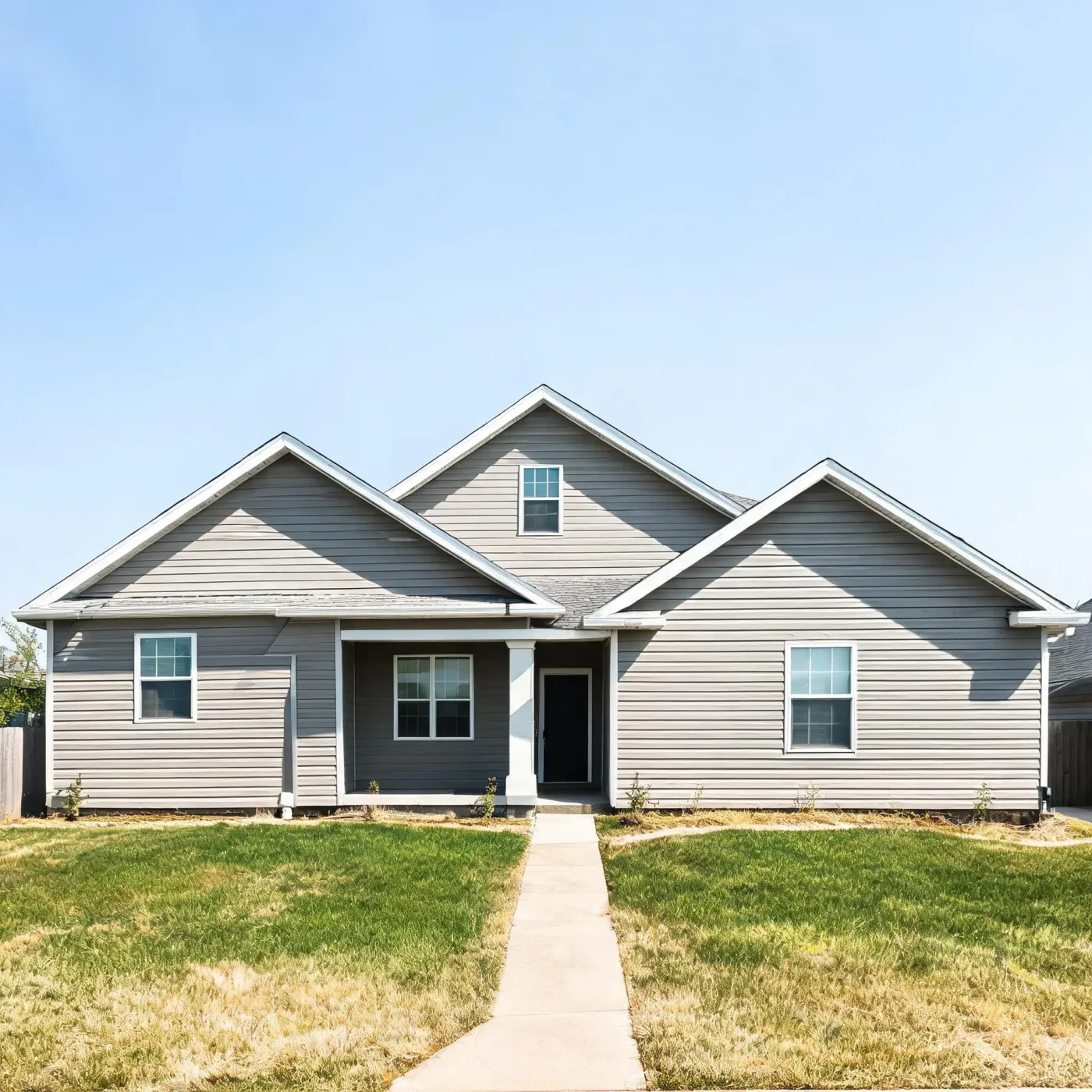
A single-story gray horizontal-siding house with multiple front-facing gables, white-trimmed windows, a dark front door, and a concrete walkway crossing a partly dry lawn under a clear blue sky.

Summer air in Wisconsin carries a dew point around 60°F, from NOAA climate records. That's muggy enough that your heat pump isn't just cooling the air, it's wringing a real amount of water out of it too. That extra load means longer run times on sticky afternoons, and a unit with a dirty coil or a little low on charge will fall further behind than it would on a drier day. You might notice the house feels cool but not quite dry, or the system runs through the evening without much of a break. That's the moisture, not just the heat, and it's what pushes a marginal unit into one that can't keep up.

NASA POWER T2MDEW county cells weighted by homes

A heat pump that's icing over, short cycling, or leaning on the furnace more than it should is telling you something, and by now the repair cost, the age of the unit, and what it's doing to your power bill have probably told you the rest. Some of these units are worth fixing. Some aren't, not with another Wisconsin winter coming. Either way, the answer isn't the hard part anymore. What's left is finding a contractor you trust enough to let into your house, one who will look at your system and give you a straight answer instead of a guess. You don't have to call around, explain the same problem three times, or sort through quotes that don't match up. You get matched with a contractor who works on heat pumps like yours, and they reach out to you.

Close view of a dark standing-seam metal roof with a stone chimney and metal flue cap, overlooking a wide river, trees, and flat farmland under a partly cloudy sky.

A pro who works on heat pumps

Fill out one form

No charge to send it. You decide if you hire them.

A new heat pump matched to your home means no more guessing which repair call will be the last one. Skip the searching, the phone calls, and repeating the same story to every contractor. Send one request and let someone qualified reach out to you.