Why your heat pump has ice on it in a Wisconsin winter

Step 1 of 3: Equipment

Why does my heat pump have ice all over it in winter?

Wisconsin winters bring real cold, and seeing your outdoor unit coated in ice can look like something has gone badly wrong. Some frost in that weather is normal, but when it builds up thick and doesn't go away, it's worth knowing why, especially with how much a heat pump leans on electricity to keep your home warm through the season.

A little frost is normal. A heavy coat of ice that won't clear is not.

Your heat pump pulls heat out of the outdoor air even when it's cold, and that process cools the coil below freezing, so some frost forms on it naturally during a Wisconsin winter. The unit is built to handle this. It runs a defrost cycle on a timer, switching briefly to cooling mode to melt that frost off the coil, then switches back to heating. If the ice keeps building past that cycle, something is stopping the defrost from working, often a stuck defrost control, a failed sensor, or a fan that isn't moving air the way it should. Left alone, that ice blocks airflow across the coil, the system has to work harder to pull heat from the air, and your electric bill climbs along with it.

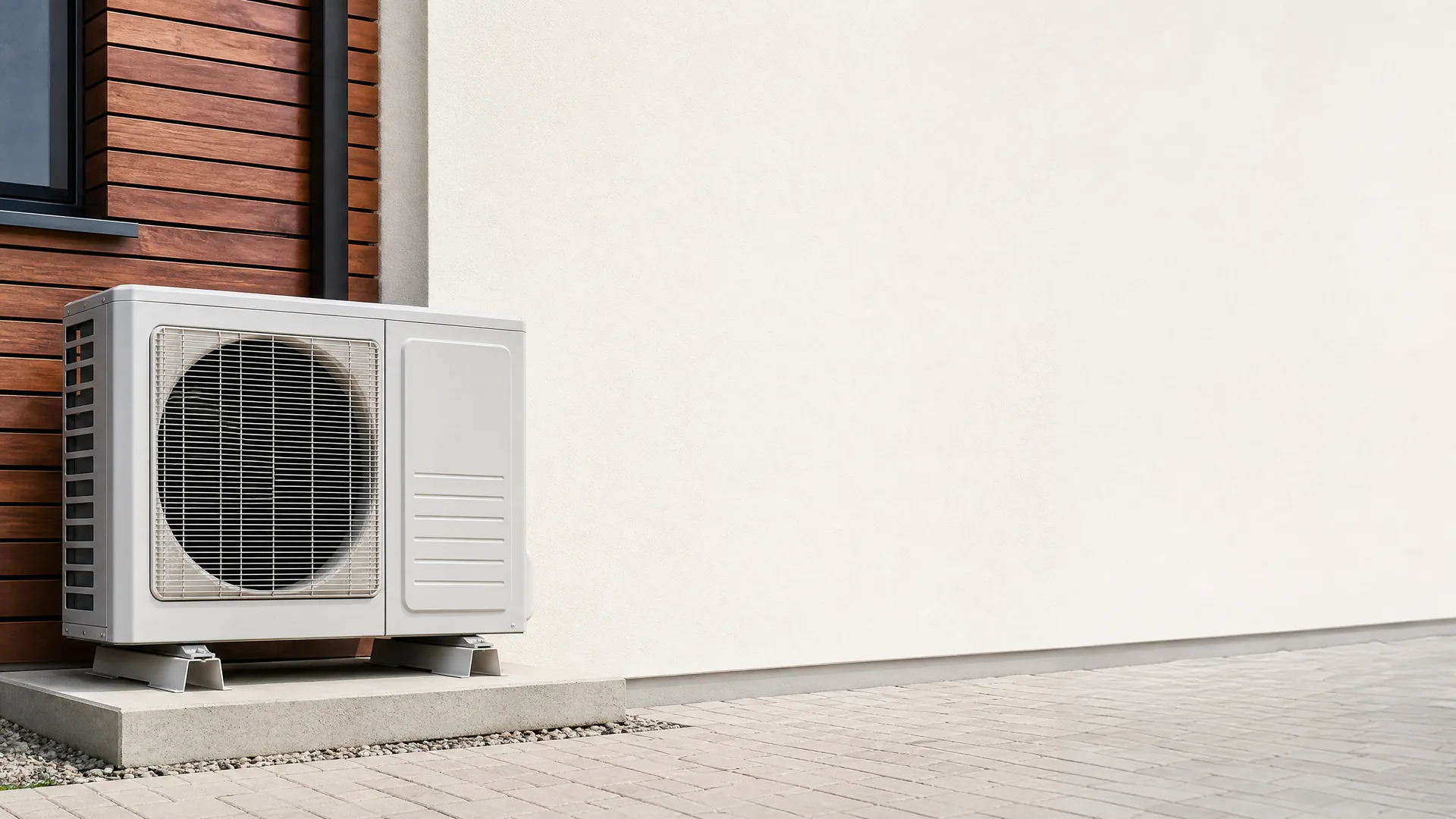
A white outdoor heat pump unit on a concrete pad beside a house with wood-slat siding and a large plain light-colored stucco wall, with paving stones in the foreground.

The defrost cycle and why it exists

Your heat pump pulls heat out of the outdoor air even when that air is near freezing. In the process, moisture in the air lands on the cold coil and freezes. The unit is built to handle this. It runs a defrost cycle every so often, reversing briefly to melt that frost off, then switches back to heating. You'll sometimes see steam rise off the unit when this happens. That's normal and it means the cycle is working.

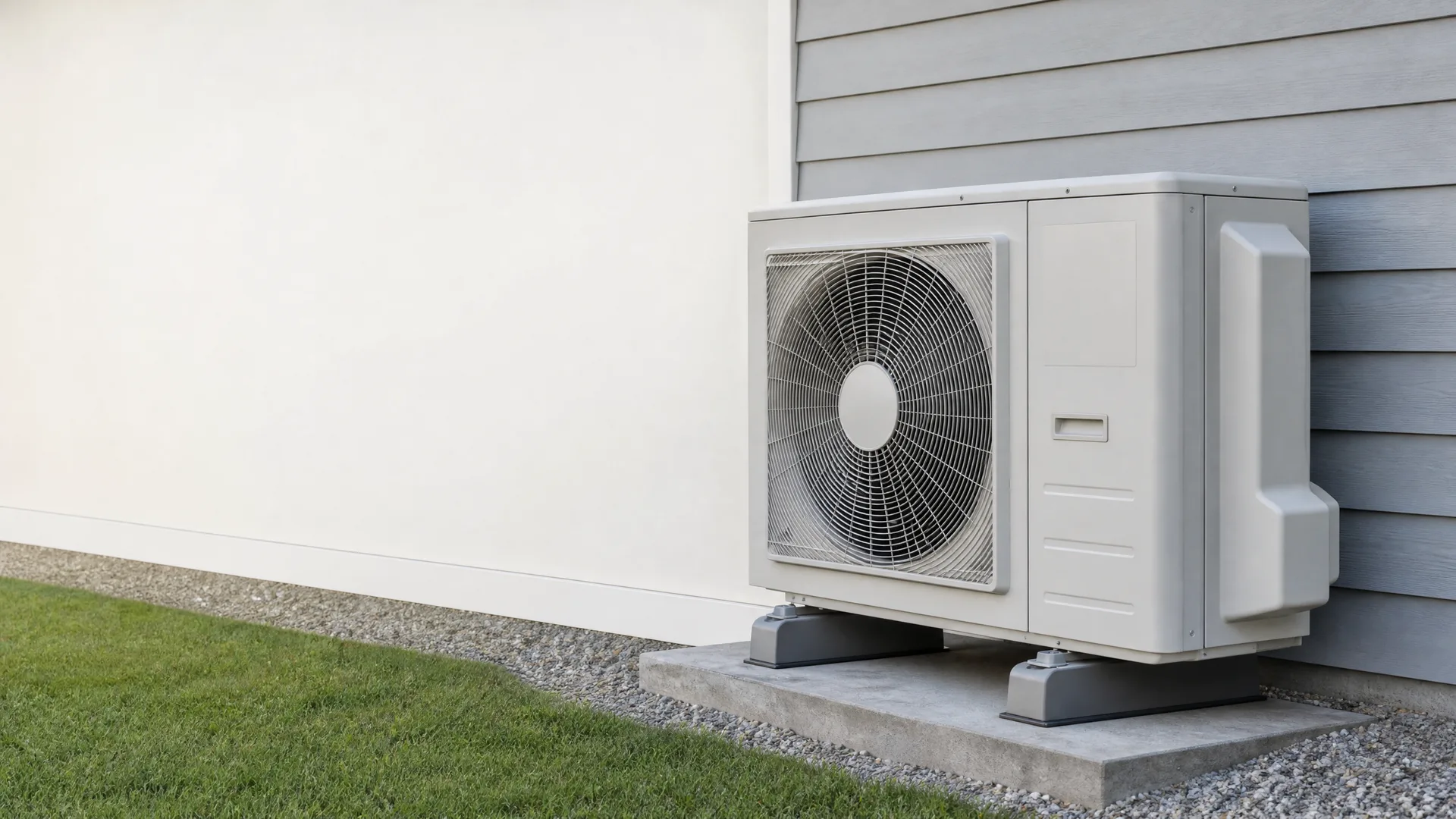
A white outdoor heat pump unit on rubber feet sits on a concrete pad beside a gray-sided house wall, next to a smooth light wall, gravel strip and lawn.

When the cycle stops working

A reversing valve that's stuck, a defrost sensor that's failed, or a control board giving bad signals can all keep that cycle from kicking in. When it doesn't run, frost that would normally melt off every so often just keeps building. Given enough days of Wisconsin cold, what started as a light coating turns into a solid sheet across the coil. At that point the unit is working harder to move the same amount of heat, and your electric bill will show it.

Power costs 18.08 cents per kilowatt-hour statewide

At 18.08 cents per kilowatt-hour, running a heat pump that's stuck defrosting or icing over costs you more every hour it struggles. A unit that can't shed ice efficiently works harder to heat your home, and that shows up on your bill before you notice the ice itself.

EIA-861 2025 statewide residential average

Frost that melts off on its own

A thin white coating on the coil or the bottom of the cabinet after a cold night is normal. Run the defrost cycle and it should clear within an hour or so, and the unit goes back to heating like usual. You might see this a few times a week when temperatures sit near or below freezing. No action needed here. If the frost comes back looking the same way each time and melts off each time, the system is doing what it was built to do.


Ice that keeps building back

Thick ice across the coil, ice on the fan, or ice that's still there hours after the unit ran its defrost cycle is different. That means the defrost cycle isn't clearing it, or isn't running often enough, or isn't running at all. A unit in this state is losing its fight with the cold, not managing it. Left alone, it keeps pulling less heat from the air while pulling the same power, and parts can take damage from ice sitting on them for days at a stretch.

A woman with dark hair in a bun sits wrapped in a chunky knit blanket on a couch with a child resting his head on her shoulder, eyes closed, beside a lit lamp and bookshelf indoors.
A smiling older woman with gray hair in a cream knit sweater stands in a dimly lit kitchen beside a window showing snow outside, with a round loaf of bread on the counter in the foreground.

Explain it one time

Your request stays with one local pro.

Asking costs nothing, and the choice to hire stays yours.

How your heat pump clears ice

  • A reversing valve switches the refrigerant flow so the outdoor coil briefly acts like an evaporator in summer, melting the ice.
  • A defrost thermostat or sensor on the outdoor coil tells the control board when the coil is cold enough to trigger a cycle.
  • During defrost, the outdoor fan shuts off so heat isn't blown away before it can melt the ice.
  • Many systems fire supplemental heat strips or run the furnace during defrost so the house doesn't feel a cold blast indoors.
  • A stuck reversing valve or a failed defrost sensor will let ice build for hours instead of clearing on schedule.
  • A dirty outdoor coil or a low refrigerant charge makes the coil run colder than it should, so frost forms faster than the defrost cycle can keep up with.

Inside the outdoor unit, a reversing valve controls which direction the refrigerant flows. In heating mode, that valve sends refrigerant one way to pull heat from the outside air. When frost builds on the coil, the control board switches that valve so the system briefly runs in reverse, sending hot refrigerant out to the coil instead of inside. That's what melts the ice. The board knows when to do this because of a defrost thermostat or sensor clipped to the coil itself, reading its temperature and reporting back. Once it hits a set point, the board starts the cycle.

While defrost runs, the outdoor fan shuts off. If it kept spinning, it would blow the heat meant for melting ice right past the coil and out into the cold air. Inside your house, this is also when the backup heat kicks in, either strips in the air handler or the furnace itself, so the air coming out of your vents doesn't suddenly turn cold for the few minutes defrost takes.

All of this depends on each part doing its job in order. If the reversing valve sticks, or the defrost sensor fails to report the coil's temperature correctly, the cycle never starts, and ice keeps building instead of clearing. A coil caked with dirt or a system low on refrigerant runs colder than it's supposed to, so frost forms faster than a normal defrost cycle was ever designed to keep up with.

A woman in a gray sweatshirt with her hair pinned up sits in a living room looking off to the side, with a pale sectional sofa, cushions, a potted plant, framed wall art and a large window behind her.
A woman with long wavy brown hair in a gray top and dark cardigan stands near a window, looking to the side, with a living room, fireplace and round mirror blurred behind her.
A woman with curly dark hair in a grey long-sleeved top sits on a grey couch with patterned cushions, looking off to the side in a softly lit living room.
A woman in a gray knit sweater with her hair in a bun sits on a couch indoors, smiling and looking off to the side, with a dining area and framed picture blurred in the background.

A little frost on the coil on a cold morning is nothing to worry about. Ice that stays after a defrost cycle, or builds up thick along the coil or the base of the cabinet, means something in the system isn't doing its job, whether that's a reversing valve, a defrost sensor, or a fan that's slowed down. That's not something to wait out through a Wisconsin winter while your house depends on it. A contractor who works on heat pumps in this climate all season has seen this exact problem on units like yours and knows where to look first. You'll be working with one licensed local contractor, not a handful of companies calling you back at once, which means you explain what's going on with your unit a single time to someone who's going to actually fix it. Ice on the unit is the system telling you it's working harder than it should to keep your home warm. Getting it looked at now means one less thing standing between your family and a steady heat all winter.

Sunlit corner of a room with a wooden sideboard holding a ceramic vase of olive branches and a dark wooden bowl, beside a white-framed window, a hardwood floor and woven rug.
A wooden cabinet holding a pale ceramic vase with leafy branches stands beside a beige wall in a sunlit room with hardwood floors, a jute rug, and a window showing green foliage outside.
Sunlit room corner with a beige upholstered sofa holding a rust-brown cushion, beside floor-length linen curtains at a window, over a wood floor with a woven rug.
Corner of a room with beige walls, a framed photograph, a floor-length linen curtain beside a window, an upholstered armchair with a knit pillow, white baseboards and trim, wood flooring and a pale rug.
Sunlit living room corner with a beige upholstered armchair with a cushion, linen curtains beside a wooden-framed window, green vertical panelled wall with a framed print, and a wooden table edge over a woven rug.

Skip the calls to every shop

Your request goes to one pro, not a list of companies.

Find a local pro

No fee to send it, and nothing to sign.