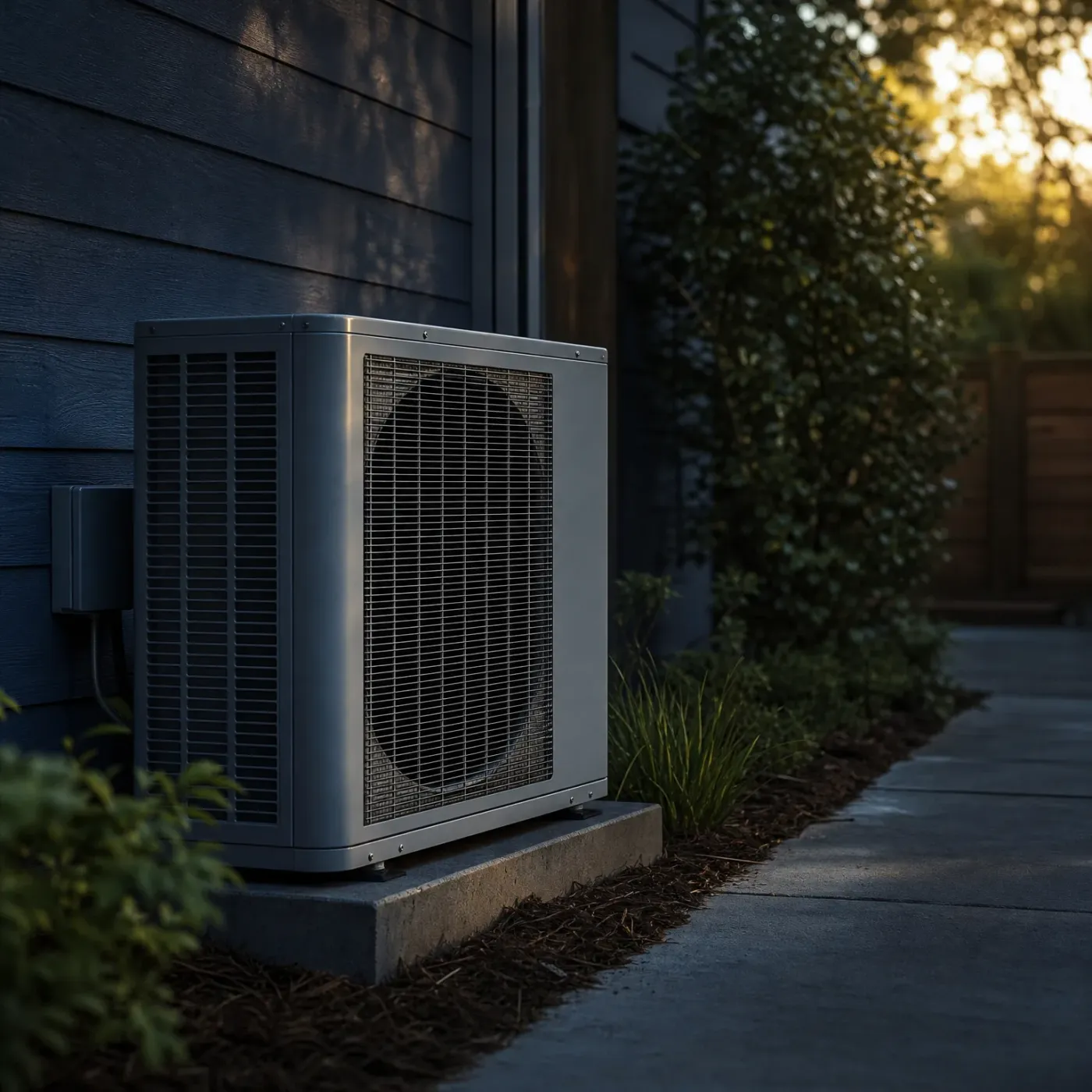
A gray outdoor heat pump unit on a concrete pad beside a dark horizontal-siding wall, with a small electrical box on the wall, shrubs and a concrete walkway to the right at dusk.

No phone calls to make

Why your heat pump won't turn on in Wisconsin

A heat pump that won't start could be a thermostat setting, a tripped breaker, or something inside the unit itself, and in Wisconsin cold that matters fast. This page walks through what to check first and what it means if none of it works. Skip the search for a contractor, the calls, and the back and forth of quotes: tell us what's going on once, and a local contractor who works on heat pumps all winter takes it from there.

Skip the search

A heat pump that won't turn on in Wisconsin usually comes down to one of a few things. Check the thermostat first. If it's set to heat and the temperature is above the room's actual reading, it should be calling for heat; if it isn't, the thermostat itself or its wiring may be the problem. Next, check the breaker, both at the outdoor unit and at the air handler, since a heat pump draws power at both. If those are fine, look at the outdoor unit itself. In a Wisconsin winter, ice can build up on the coil and keep the system from running right, and some units will shut themselves off rather than run through a heavy frost. If the thermostat calls for heat, the breakers are on, and the outdoor unit is still dead or frozen solid, something inside it has failed and it needs a technician before the cold does any more damage.

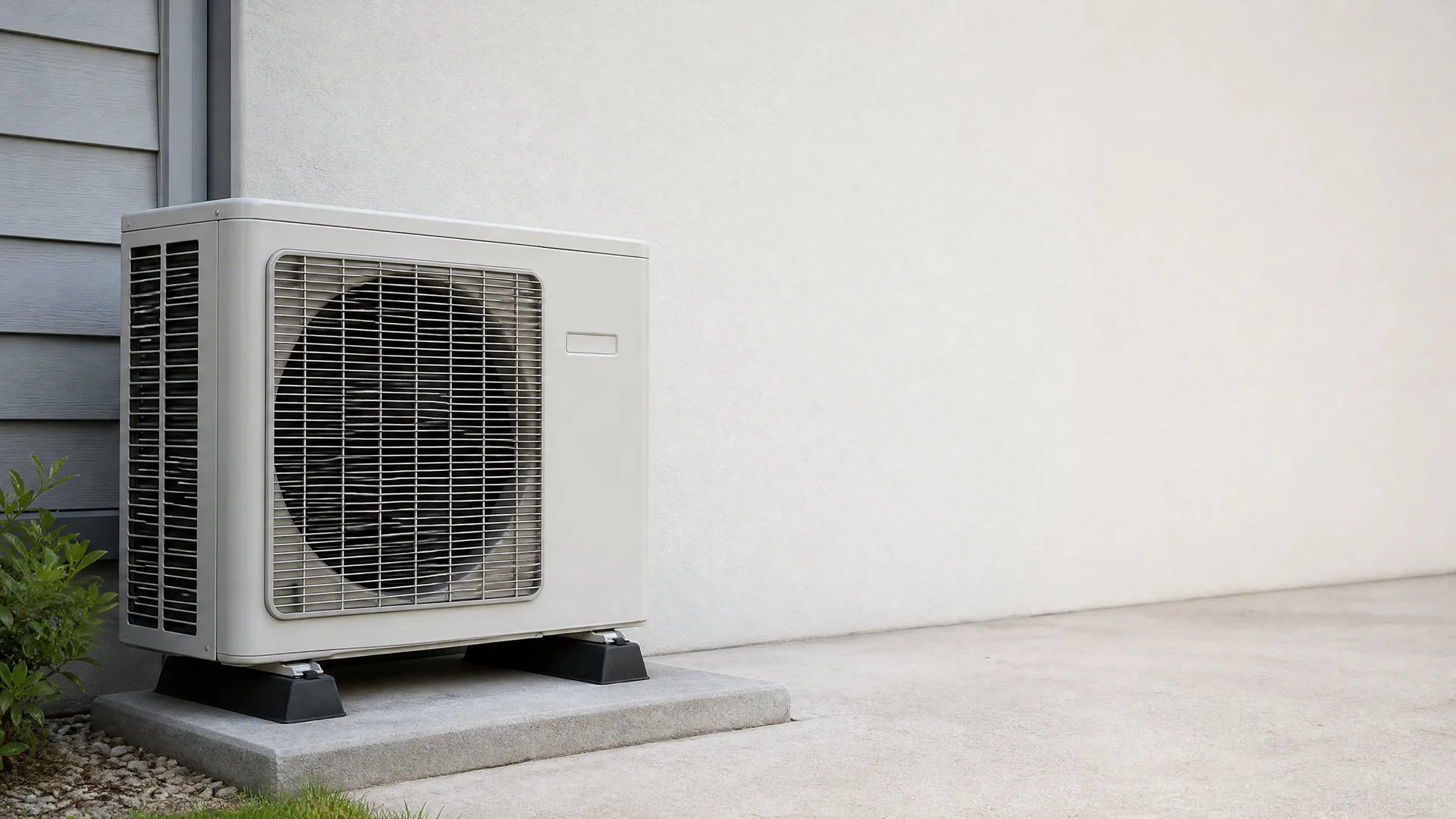
A white outdoor heat pump unit on rubber feet atop a concrete pad beside a light stucco wall, with gray siding and a small shrub at the left edge.

Why cold shuts the unit down

A heat pump moves heat from the outside air, even when that air is well below freezing. Below a certain outdoor temperature, most systems bring on backup heat strips or rely on a furnace to carry the load. If the outdoor coil ices over and the defrost cycle isn't clearing it, the unit can sense the problem and shut itself off rather than run damaged. That's a control doing its job, not a random failure.

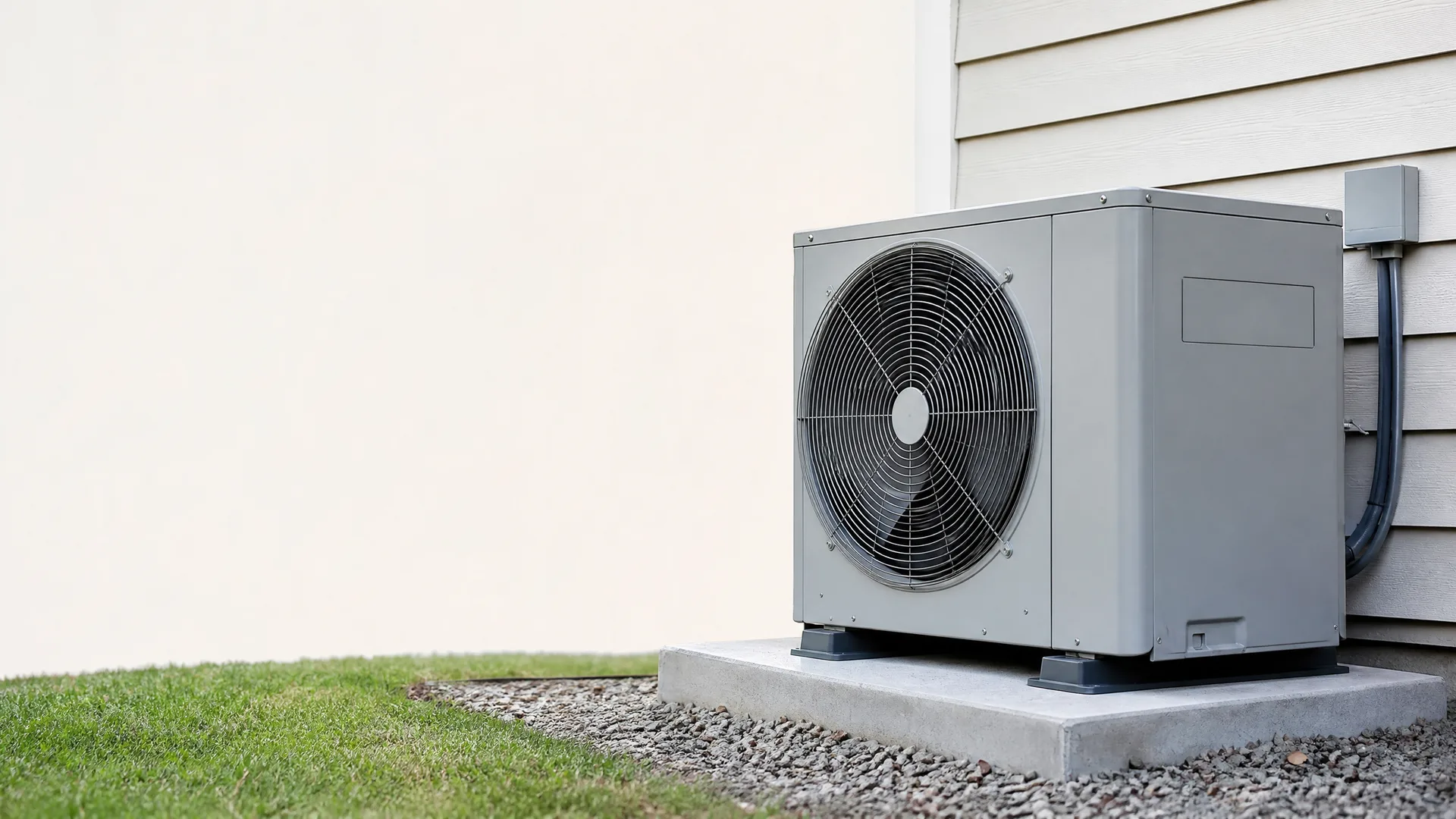
A gray outdoor heat pump unit with a large circular fan grille sits on a concrete pad beside a house with horizontal siding, surrounded by gravel and grass, with a conduit and junction box on the wall.

What the breaker tells you

A heat pump pulls more current on startup than it does once running, and a breaker that trips right when the system kicks on often points to the compressor working harder than it should, not a weak breaker. If you reset it and it holds for a while before tripping again, that pattern matters. A contractor who services these year-round reads that pattern fast, because it usually narrows the problem before the panel's even off.

Is your house getting colder while the unit sits there

You might notice the outdoor unit isn't running at all, no hum, no fan turning, while the thermostat shows a call for heat. Or it's running but the air coming out feels barely warm, so the house slides a degree or two lower than you set it. Some homeowners hear a click from the outdoor unit followed by nothing, which points to a part trying and failing to start. If your home relies on the heat pump as the main source of heat rather than backup to a furnace, a unit that won't run means the house has no way to recover that warmth on its own, and in a Wisconsin January that gap closes fast.

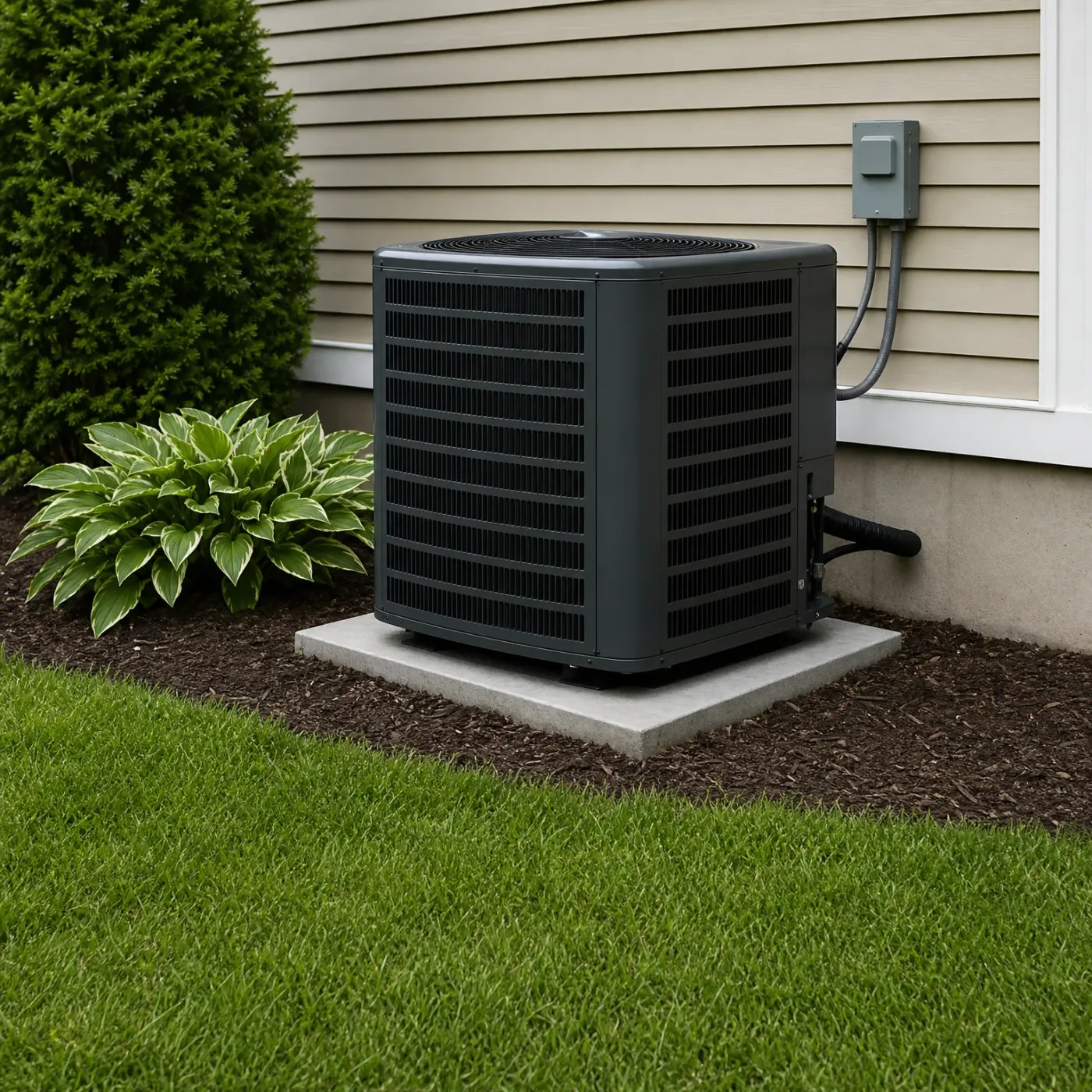
A dark gray outdoor condenser unit on a concrete pad beside a house with beige horizontal siding, with a gray electrical disconnect box and conduit on the wall, mulch beds, a hosta plant, a shrub, and mowed lawn in front.

Running the way it should

This is a heat pump doing its job, fan turning, pad clear, disconnect box right where a technician would expect it. Nothing coated, nothing blocked. When it looks like this, a no-start is almost always a setting or a breaker, not the equipment.
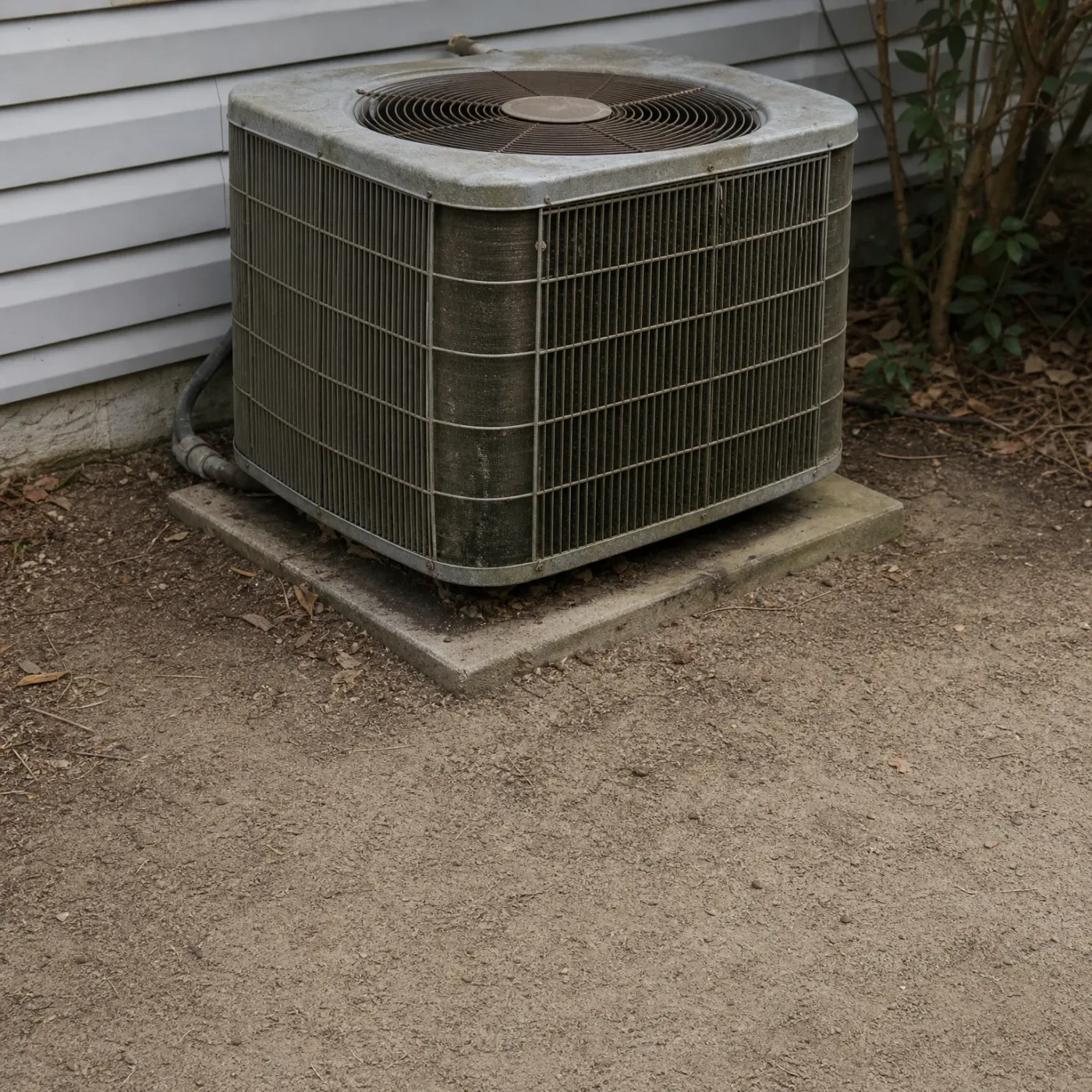

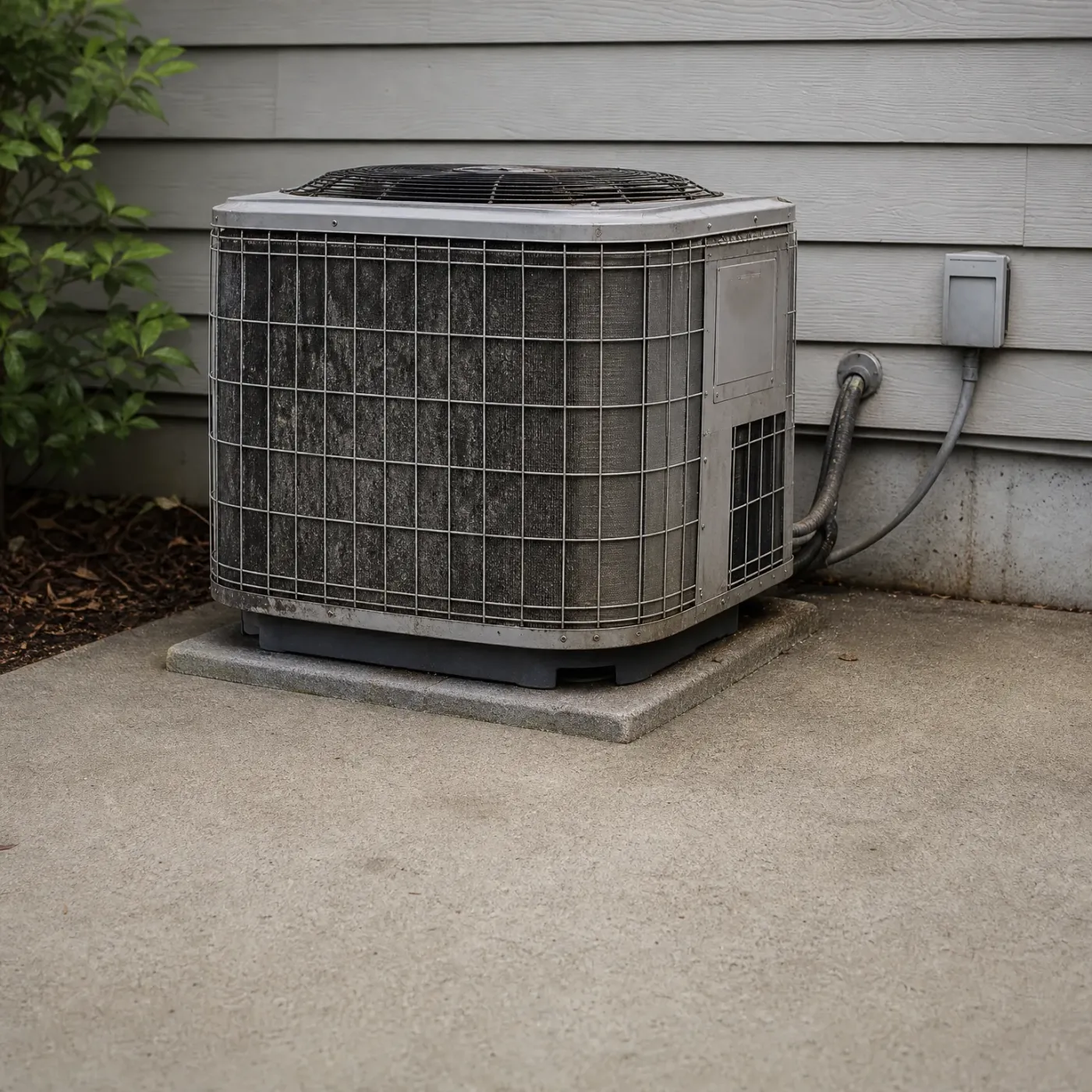
A weathered outdoor condenser unit on a concrete pad beside a house with light horizontal siding, surrounded by bare dirt and a shrub.

Years of buildup, and a cold snap on the way

Grime like this across the grilles chokes the airflow the outdoor coil needs to pull heat from the air. In a Wisconsin winter, a unit already working that hard has less room to struggle before it just quits.

A middle-aged woman with shoulder-length dark hair, wearing a gray cardigan over a cream top, sits in an upholstered armchair and looks toward a sunlit window, with a shelf holding framed pictures and a plant behind her.
A woman and a child wrapped together in a thick knitted blanket on a sofa, both with eyes closed, with a lit table lamp and houseplant in the dim background.

A frozen outdoor unit can still look fine from the porch. Ice builds along the coil or base and the defrost cycle that's supposed to clear it never kicks in, so the system locks out rather than run against a block of ice.

A unit that's clear of ice and still won't start points somewhere else, a failed control board, a bad contactor, a compressor that won't engage. That's a repair, not a thaw, and it's worth a technician's look before another cold night goes by.

A gray-haired man in a dark sweater sits on a light gray sofa in a living room, looking toward a sunlit window with trees outside.
A gray-haired man in a dark blue sweater sits on a light gray sofa in a sunlit living room, looking off to the side, with a potted plant, shelving unit, and large glass doors behind him.
A bearded man with graying hair in a dark green sweater sits on a sofa in a living room, looking off to the side, with a sliding glass door and a dim kitchen doorway behind him.
A gray-haired man in a dark knit sweater sits on a light gray sofa in a living room, looking toward a sunlit window, with houseplants, a lamp, and framed art in the background.
An outdoor condenser unit on a concrete pad beside a light-colored lap-sided house, with a trimmed hedge, mulch bed and mowed lawn nearby and an electrical box and conduit on the wall.

One form, no calling around

Your request stays with one local pro.

Fill out one short form instead of calling around.

Skip the calls

You're not committing to anything by asking.

What's the defrost cycle and why would it keep my heat pump from starting?

You've heard the term defrost cycle mentioned but never thought about it until now, when your heat pump sits quiet on a cold Wisconsin morning and you're trying to figure out if that's the reason. You want to know what it actually does, what order things happen in, and why it would stop the unit from starting instead of just running like normal.

Defrost clears ice off the outdoor coil, and a stuck cycle can leave the unit locked out

When ice builds on the outdoor coil, the system reverses itself for a few minutes, sends hot refrigerant outside to melt the ice, and the outdoor fan stops while this happens. That's normal and it should end on its own, the unit switching back to heating once the coil is clear. What shouldn't happen is the system staying in that reversed state, or shutting down afterward instead of restarting. That points to a stuck reversing valve, a failed defrost control board, or a sensor reading the coil temperature wrong. None of those are something to force a fix on. A technician checks the sensor readings and the valve itself before touching anything, and getting that order wrong can leave you with a bigger repair than you started with.

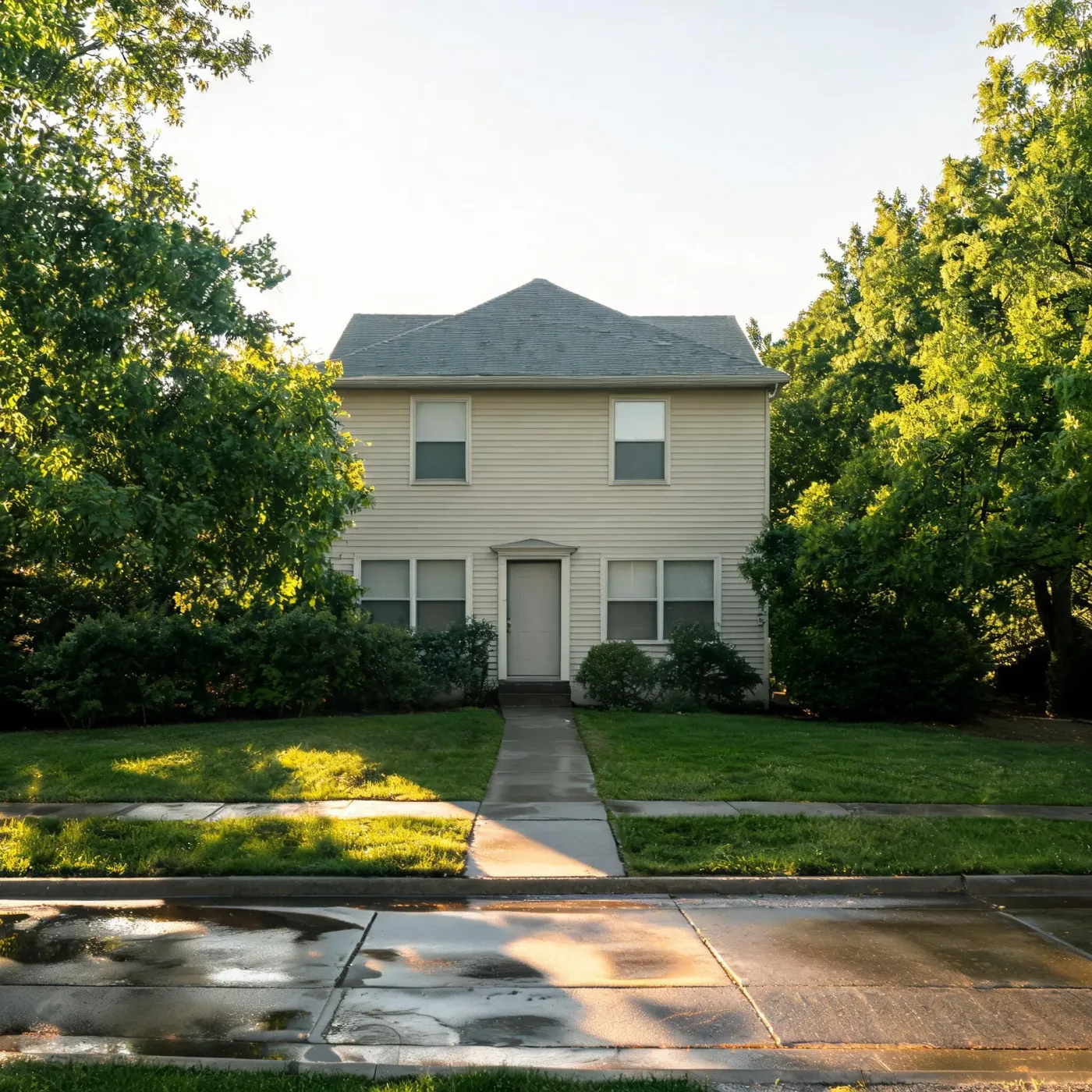
A two-story cream-colored house with horizontal siding and a gray hipped roof, flanked by large green trees and shrubs, with a concrete walkway crossing a lawn to a wet street in the foreground.

Summer dew points in Wisconsin average 60°F across June, July and August, per NOAA climate data. That's sticky, heavy air, and your heat pump has to pull moisture out of it along with cooling the house. In winter the same system runs in reverse, and sticky summer air isn't what causes a no-start in January. But it does mean the unit works hard most of the year, running long cycles through the muggy months, and a system that's been straining all summer can show its weak points once the cold sets in and it switches over to heat.

NASA POWER T2MDEW county cells weighted by homes

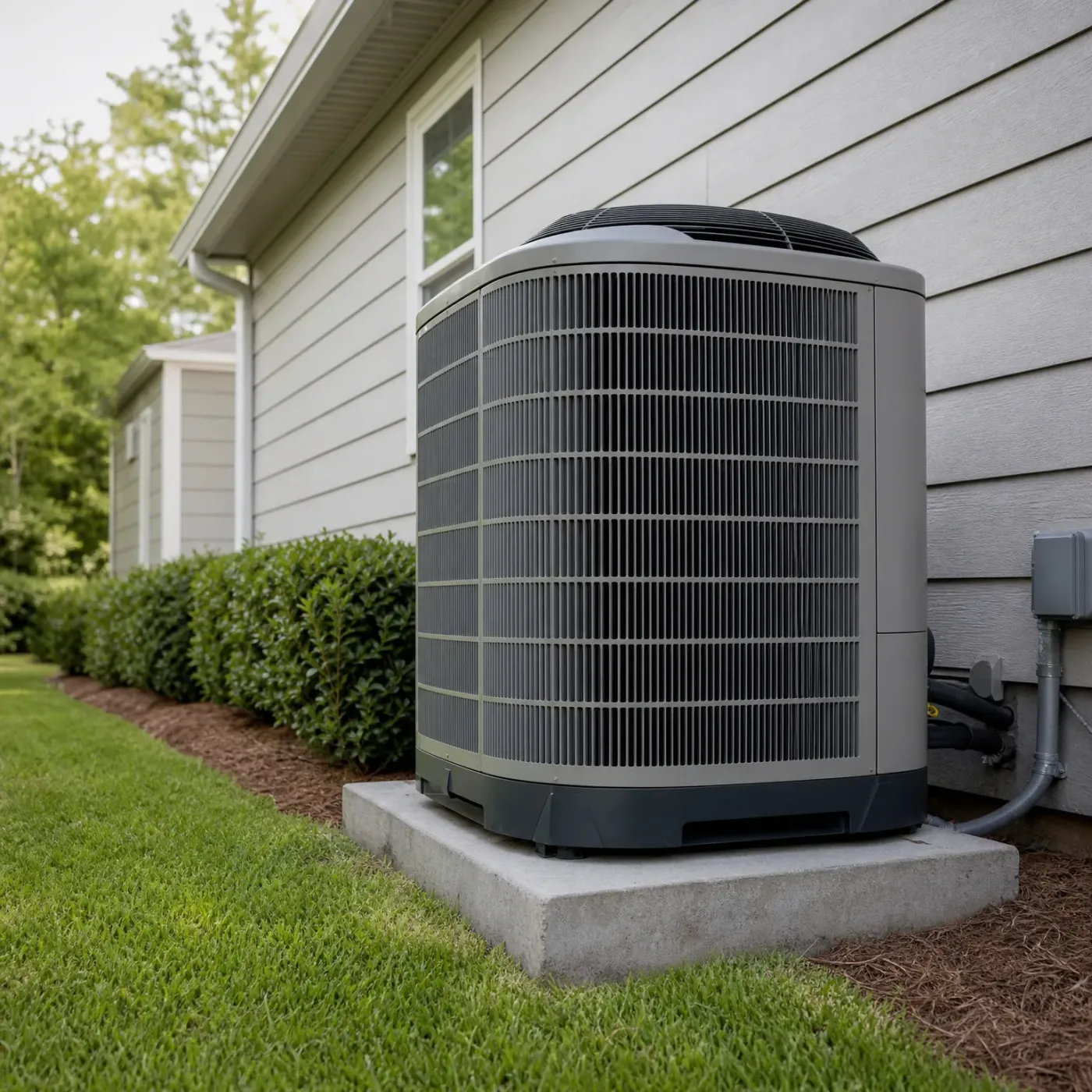
A gray outdoor condenser unit on a raised pad beside a house with horizontal lap siding, with refrigerant lines, conduit and an electrical disconnect box on the wall, and shrubs on a mulch bed to the left.
A clean condenser like this one pulls air through freely, so the fan and compressor aren't straining before the no-start even starts.
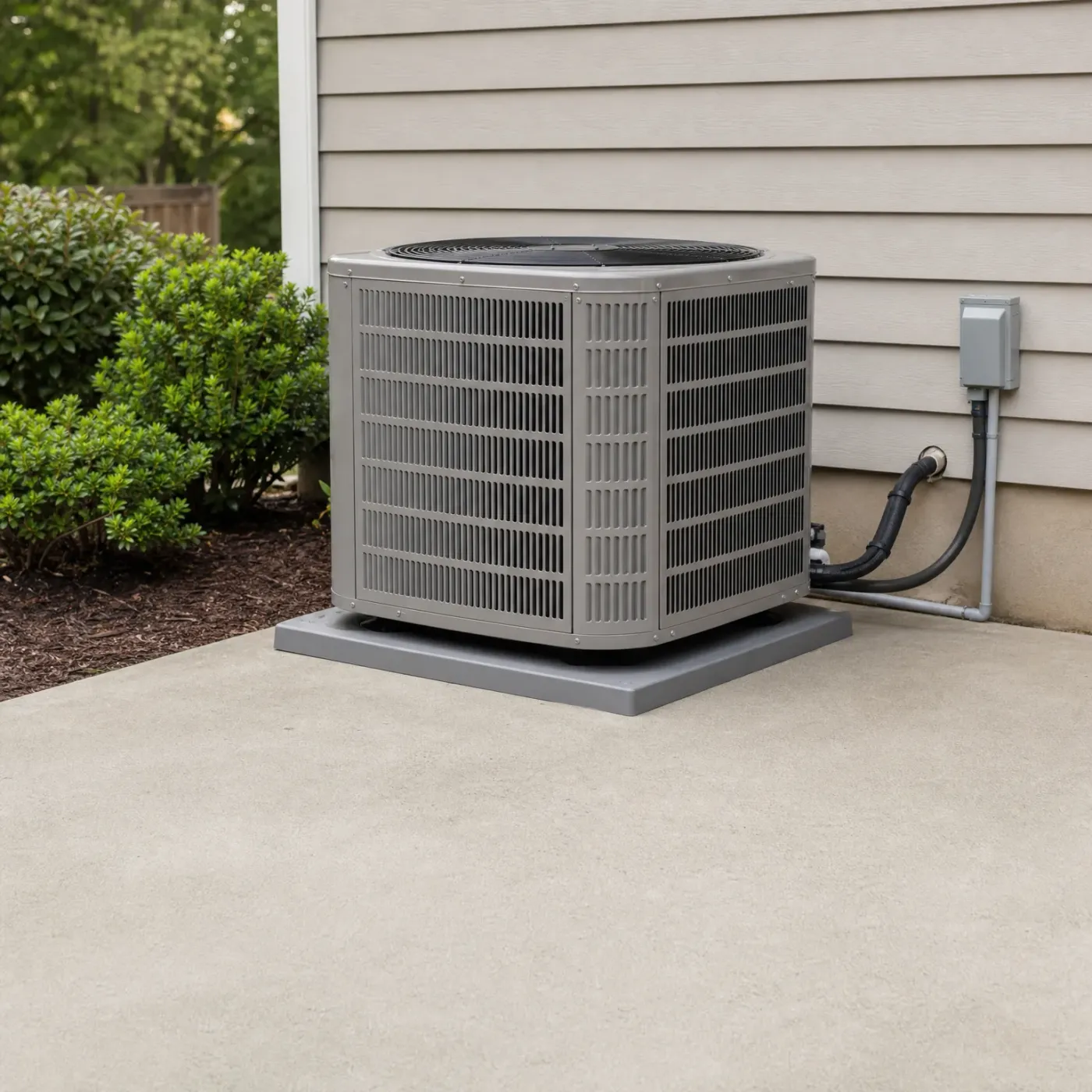
An outdoor air conditioner condenser unit on a gray composite pad beside a house with horizontal lap siding, with refrigerant lines and a conduit running to a wall-mounted disconnect box, and a shrub at left.
A cabinet caked like this traps heat and dirt around the coil, and that buildup can be enough to keep the unit from starting at all.
  1. Thermostat calls for heat and sends a signal to the control board

  2. Control board checks safety switches before letting the unit run

  3. Defrost control checks outdoor coil temperature before allowing startup

  4. Contactor closes and sends power to the outdoor fan and compressor

A closed silver laptop and a glazed ceramic mug on a wooden table, with a blurred kitchen counter, potted plant, cutting board and window in the background.

What this comes down to

A heat pump that won't start in Wisconsin is almost always one of a short list: a thermostat setting, a tripped breaker, a frozen coil that's locked the system out, or a part inside the control board that's failed. Checking the thermostat and the breaker takes a few minutes and rules two of those out. The rest need someone who can open the cabinet and test what's inside.

That's where most people lose time, calling around to find out who actually works on heat pumps in their area, explaining the symptoms over and over to different companies, then sorting through quotes that don't tell them much without seeing the unit. A licensed local contractor who services this equipment all winter has usually seen the exact fault your system is showing, and you'd be working with one of them, not fielding calls from several.

Interior corner of a living room with a beige upholstered sofa and dark cushion in the foreground, a ceramic vase of leafy branches on a dark side table by a curtained window, a framed picture on the wall, and a wood-surround fireplace at right.
At dusk, a dark board-and-batten house with a standing-seam metal roof and lit entry walkway of stone pavers, with two large outdoor heat pump units on a stone-walled pad at right and trees and hills in the background.

Heat Pump Repair

Skip the search

Step 1 of 3: Equipment
  • A beige upholstered armchair with an olive cushion sits in a sunlit corner beside a wooden side table holding a ceramic vase with leafy branches, under a framed abstract artwork, on a woven rug over a wood floor.
    • Tell a local repair pro what your heat pump is doing.
    • Describe your heat pump job, and a local pro who handles it gets in touch.
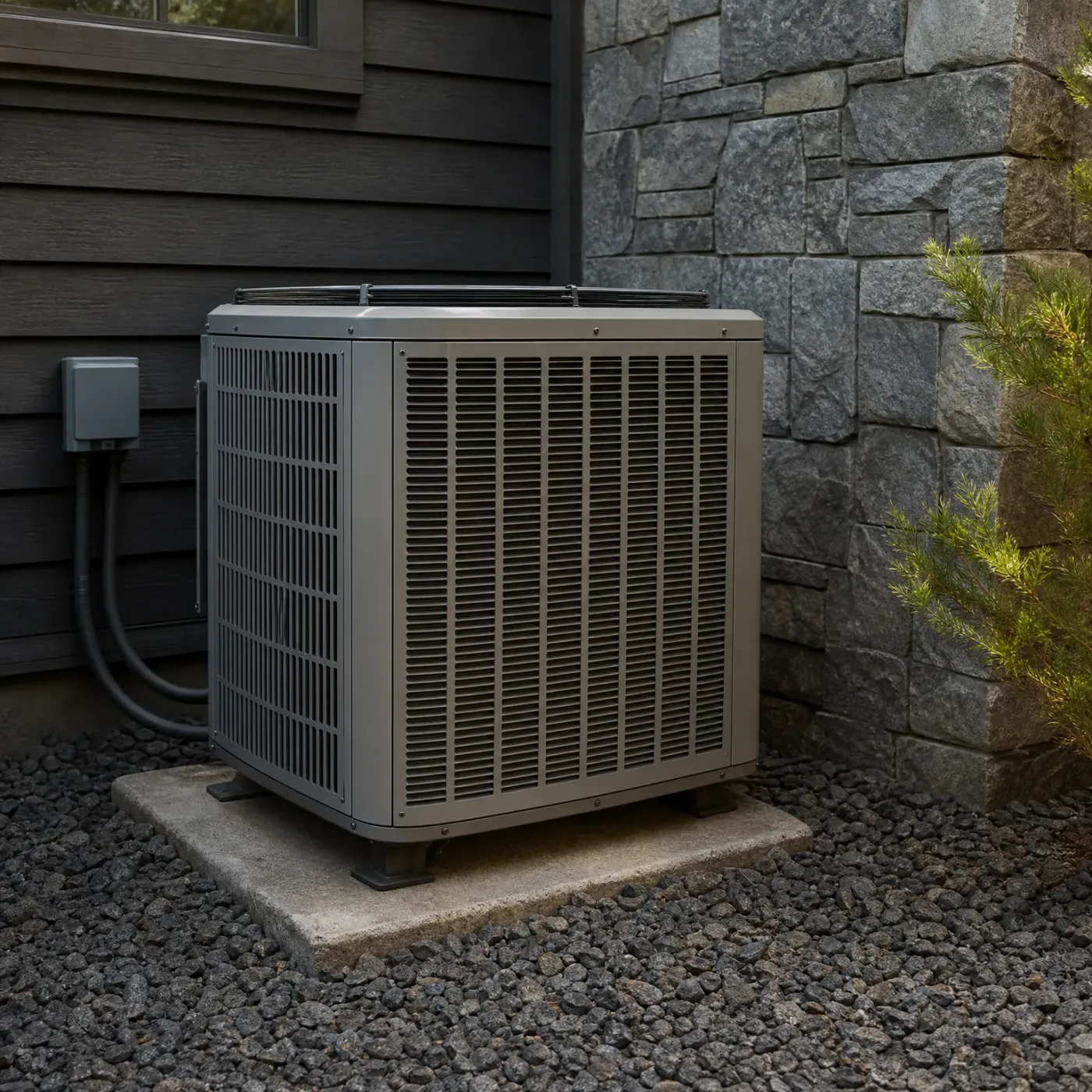
  • A gray outdoor condenser unit on a concrete pad surrounded by dark gravel, beside a dark wood-sided wall with an electrical disconnect box and a stone veneer wall with a small evergreen shrub.
    • Send it once and finding someone is no longer on you.
    • Send the request today and let a heat pump pro reach out to you.
  • A beige upholstered oversized armchair with a matching cushion and a knit throw draped over one arm, beside a round wooden side table holding a vase of greenery near a curtained window, with a framed landscape print on the wall and a woven rug on a wood floor.
    • Skip searching for a heat pump pro and answer a few questions instead.
    • One form replaces the calls you'd make to find a heat pump pro.
  • Sunlit living room corner with a beige upholstered sofa, cushion and knitted throw, a round wooden side table holding a white ceramic vase of leafy branches and a small wooden bowl, a framed landscape painting on the wall, and a window at right.
    • The pro who reaches out is licensed in Wisconsin.
    • Only one pro gets your request, so you hear from one company.